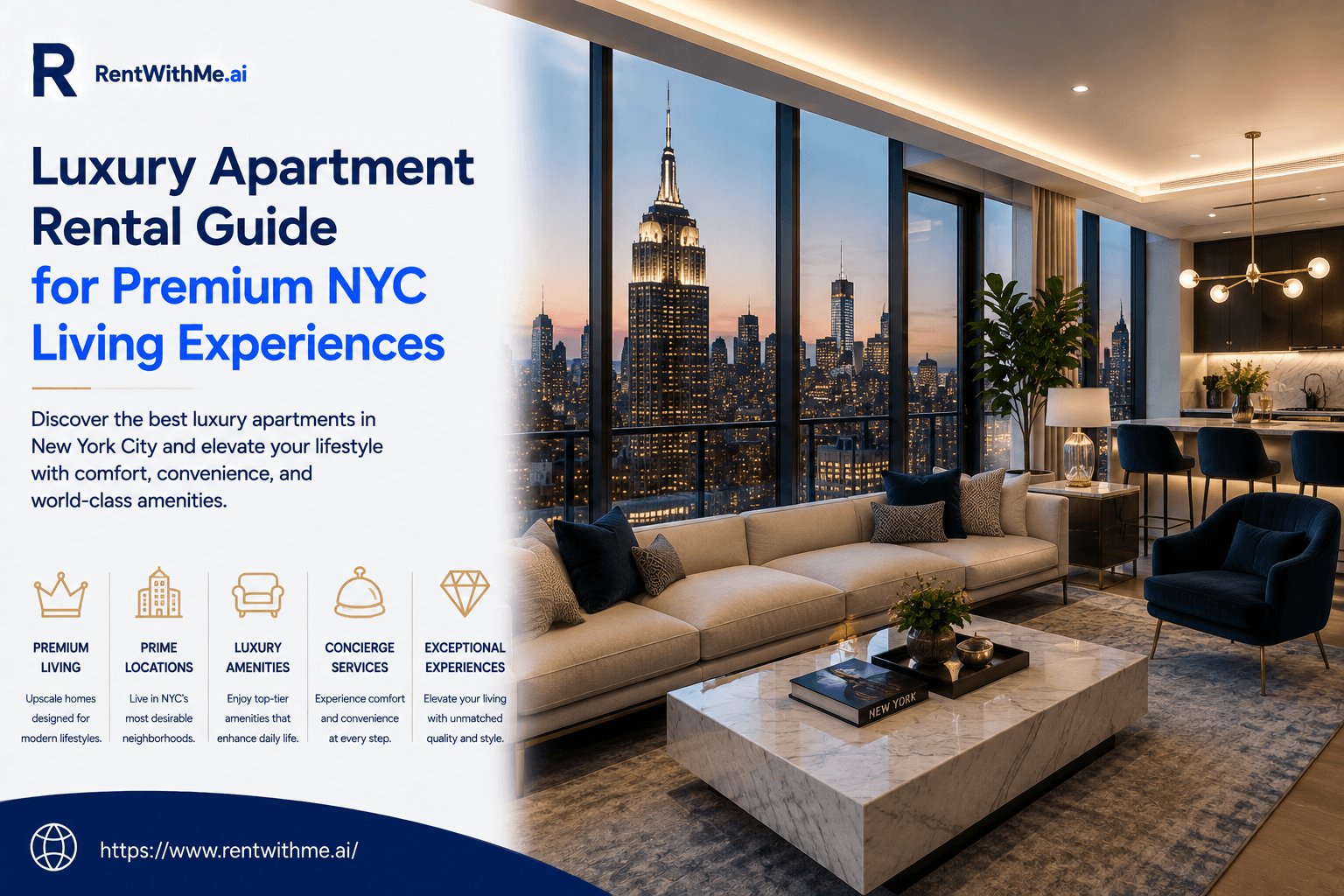
Luxury Apartment Rental Guide for Premium NYC Living Experiences
Introduction
Luxury apartment living in New York City means different things to different renters. For some, it is about skyline views and high-end finishes, while others care more about privacy, attentive building staff, spacious layouts, or convenient access to premium amenities.
The strongest luxury rentals usually combine several qualities rather than relying on one impressive feature. A beautiful kitchen may catch your attention during a tour, but long-term satisfaction often depends just as much on building management, sound insulation, storage, natural light, security, and how smoothly everyday life works.
That is why choosing a premium apartment requires a more thoughtful approach than simply selecting the most expensive property within your budget. Higher rent should translate into meaningful improvements in comfort, convenience, service, location, or overall living quality.
New York City offers a wide range of upscale rentals across different neighborhoods and building styles. Some properties emphasize modern design and extensive amenities, while others offer larger residences, distinctive architecture, private outdoor space, or a quieter residential atmosphere.
The right luxury apartment is ultimately the one that supports your lifestyle rather than the one with the longest amenity list. Understanding what creates genuine value before you begin touring properties can help you compare premium rentals more confidently and avoid paying for features you will rarely use.
This guide explores the most important factors renters should evaluate when searching for a luxury apartment in NYC, beginning with location, interiors, building services, and the difference between visual appeal and real long-term value.

What Defines a Luxury Apartment in New York City
Luxury is not determined by price alone.
A high monthly rent may reflect location, apartment size, building age, limited supply, or market conditions without necessarily delivering a premium living experience. Renters should therefore look at what the property actually provides.
A true luxury rental often combines high-quality materials, thoughtful design, professional building management, and elevated resident services. The apartment should feel well considered rather than simply expensive.
Attention to detail matters.
Doors should operate smoothly, cabinetry should feel substantial, fixtures should appear durable, and lighting should support the space rather than create dark or awkward areas.
Building quality matters equally.
A luxury apartment inside a poorly maintained property can quickly lose its appeal. Elevators, hallways, entrances, common areas, and amenities should reflect the same standard as the residence itself.
The strongest premium properties create consistency from the moment you enter the building until you close your apartment door.
Understanding the Difference Between Premium Finishes and Genuine Luxury Value
High-end finishes are often the first things renters notice.
Stone countertops, designer fixtures, hardwood flooring, integrated appliances, custom cabinetry, and premium bathroom materials can create a strong visual impression.
These features can add meaningful value, but appearance should not replace functionality.
A beautiful kitchen with limited storage may become frustrating over time. A dramatic bathroom can still feel inconvenient if lighting is poor or storage is minimal.
True luxury usually comes from how well premium finishes support everyday living.
Quality materials should feel durable, easy to maintain, and appropriate for the apartment’s layout.
Renters should also distinguish between recognizable branding and actual performance.
An appliance from a premium manufacturer may sound impressive, but you should still consider size, usability, maintenance, and whether the configuration fits your routine.
The most valuable luxury features are the ones you appreciate every day rather than only during the initial tour.

Choosing the Right NYC Neighborhood for a High-End Rental Lifestyle
Location remains one of the most important components of luxury living.
A premium apartment should place you in a neighborhood that supports the way you actually spend your time.
Some renters prioritize proximity to offices, restaurants, and cultural destinations. Others prefer quieter residential streets, larger parks, waterfront areas, or a stronger neighborhood atmosphere.
Think about your daily routine rather than choosing based entirely on reputation.
A prestigious neighborhood may offer little practical value if it creates a difficult commute or places you far from the places you visit regularly.
Walk the surrounding area before signing a lease.
Explore grocery options, transportation, restaurants, fitness facilities, pharmacies, parks, cafés, and other destinations that influence everyday convenience.
Luxury should extend beyond the apartment door.
A well-located rental makes daily life easier rather than requiring constant travel for basic needs.
Balancing Monthly Rent With Location, Space, and Amenities
Premium renters often face tradeoffs between several desirable features.
One apartment may offer more interior space but fewer amenities. Another may provide a smaller residence inside a full-service building with extensive facilities.
A third may command a higher rent primarily because of location.
There is no universally correct combination.
The best choice depends on which benefits you will use most often.
Start by identifying your non-negotiable priorities.
If you work from home, interior space and natural light may matter more than a residents’ lounge. If you travel frequently, building services and security may carry greater value.
Create a realistic budget before touring.
Luxury rental searches can easily drift upward because each additional feature makes the next price level appear reasonable.
A premium apartment should feel financially comfortable, not merely technically affordable.

Understanding Total Lifestyle Value
Luxury housing should be evaluated as a complete experience.
Monthly rent is the most visible expense, but it may not reflect the entire cost of living in the building.
Amenity charges, parking, storage, utility responsibilities, and other recurring expenses may affect the total amount you pay.
At the same time, some premium features can replace outside expenses.
A strong building gym may reduce the need for a separate fitness membership. Included storage may eliminate the need for an outside unit.
Convenient package handling, maintenance support, or other building services may also save time.
The right comparison looks beyond individual fees and asks what the apartment changes about your everyday routine.
Evaluating Building Services, Staff, and Resident Experience
Service is one of the clearest differences between an ordinary apartment and a genuinely premium property.
Doormen, concierge staff, resident managers, maintenance teams, and package personnel can make daily living significantly more convenient when services are professional and consistent.
Observe how staff interact with residents during your tour.
Do they appear attentive and organized? Are common areas clean and professionally managed?
Luxury service should feel efficient rather than intrusive.
Renters should understand which services are actually available and when.
A staffed lobby can provide valuable convenience, but coverage may vary by building. Concierge services can also differ substantially between properties.
Ask how maintenance requests are handled.
Fast, professional response can matter more over the life of a lease than many decorative amenities.

Why Building Management Matters More Than Marketing
Luxury buildings often invest heavily in presentation.
Model apartments, polished websites, staged amenity spaces, and professional photography can create an excellent first impression.
Long-term resident satisfaction depends far more on management.
Elevators need maintenance.
Amenities need cleaning.
Broken equipment needs repair.
Security systems, package rooms, heating, cooling, and other building systems require consistent attention.
Look at less glamorous areas during your visit.
Hallways, service corridors visible to residents, elevators, mail areas, and shared facilities can reveal whether management maintains the building consistently.
A well-managed property usually feels organized throughout, not only in spaces designed for leasing tours.
Apartment Features That Matter Most in Premium Rentals
Luxury apartments often include a long list of features, but certain basics have greater impact on daily life than others.
A practical layout is one of the most important.
Large square footage can still feel inefficient when hallways consume too much space or rooms are difficult to furnish.
Storage should also receive close attention.
Closets, kitchen cabinets, bathroom storage, and utility areas influence how organized the apartment remains after move-in.
Climate control matters throughout the year.
Renters should understand how heating and cooling operate and whether temperature can be controlled appropriately throughout the residence.
Sound insulation is another major factor.
A luxury apartment should provide enough separation from neighboring units, hallways, mechanical systems, and outside activity to support comfortable living.
The best premium features are often the ones that quietly improve everyday life rather than attract the most attention during a tour.

Views, Natural Light, Ceiling Height, and Interior Design Quality
Luxury renters often place significant value on atmosphere.
Natural light can make rooms feel larger, more welcoming, and more comfortable throughout the day.
Window size and orientation influence how much sunlight enters the apartment.
Visit during daylight if possible.
A listing may describe a unit as bright, but neighboring buildings can affect actual light levels.
Ceiling height can also change the feeling of a residence.
Higher ceilings often create a sense of openness, particularly in smaller apartments.
Views can add substantial emotional value.
Skyline, river, park, courtyard, or open neighborhood views may all influence the overall experience.
However, views should be evaluated alongside privacy, sun exposure, and rent.
Paying a large premium for a dramatic view makes sense only when that feature is genuinely important to you.
Evaluating Window Quality
Windows affect more than views.
They influence sound, temperature, natural light, and comfort.
Stand near the windows during the tour and listen to outside activity.
Well-performing windows can make a major difference in apartments near busy streets.
Look for drafts, condensation, or visible damage.
Ask whether windows open and how ventilation is managed.
Large windows can create beautiful interiors, but they can also increase sun exposure during certain periods.
The ideal window setup balances light, views, noise control, and temperature.

Kitchens Worth Inspecting Carefully
Luxury kitchens often become one of the strongest selling points in premium rentals.
Renters should evaluate function as carefully as design.
Look at counter space.
A kitchen may feature expensive materials but provide very little room for meal preparation.
Open cabinets and drawers when appropriate.
Storage capacity and layout matter much more after move-in than cabinet finishes alone.
Appliances should fit your cooking habits.
Consider refrigerator capacity, oven size, ventilation, dishwasher placement, and overall workflow.
Lighting deserves attention too.
Task lighting around cooking and preparation areas can make the kitchen much easier to use.
The best luxury kitchen combines strong materials with practical organization.
Understanding Appliance Quality and Maintenance
Premium appliances can add value when they perform well and receive proper maintenance.
Ask whether appliances are maintained by the property and how service requests are handled.
Integrated appliances may create a clean appearance but can be more difficult to replace quickly if specialized repairs are needed.
Test basic functions during the tour when practical.
Open refrigerator doors, inspect oven controls, and make sure the dishwasher appears properly installed.
A luxury apartment should not force renters to accept complicated maintenance simply because the appliances look impressive.
Reliability should matter as much as branding.

Bathrooms That Deliver Genuine Premium Value
Bathrooms can strongly influence how luxurious an apartment feels.
Good design starts with space and function.
A large shower or soaking tub may be attractive, but storage, lighting, ventilation, and water pressure are equally important.
Inspect the vanity.
Make sure it provides enough surface area and storage for your routine.
Look at mirrors and lighting.
Bathrooms should support grooming without requiring additional lamps or awkward adjustments.
Ventilation should also be considered.
A premium bathroom needs to manage moisture effectively.
Materials should feel durable and well installed.
Loose fixtures, cracked grout, or visible water damage should never be ignored simply because the overall design looks expensive.
Storage and Closet Space in Luxury Apartments
Storage is one of the least glamorous but most valuable premium features.
A luxury apartment should support an organized lifestyle.
Bedroom closets should provide enough room for everyday clothing and seasonal items.
Entry storage can make coats, shoes, and bags easier to manage.
Kitchen cabinets should accommodate cookware, food storage, and small appliances.
Bathrooms need enough room for towels and personal items.
Some premium properties include walk-in closets, custom organizers, or additional storage rooms.
These features can add significant practical value, especially in New York where interior space is expensive.
Do not judge storage by the number of closets alone.
Open them and evaluate usable depth, shelving, hanging space, and accessibility.
Flooring and Material Quality
Flooring covers a large portion of the apartment and has a major influence on appearance.
Luxury rentals may feature hardwood, engineered wood, stone, tile, or other premium materials depending on the room.
Look at installation quality.
Gaps, damaged boards, cracked tiles, or uneven surfaces deserve attention.
Consider maintenance too.
Some materials require more care than others.
Renters should understand their responsibilities for protecting floors and reporting damage.
Acoustics can also be influenced by flooring.
Hard surfaces may transmit more sound depending on building construction.
Material quality should create both visual appeal and everyday durability.
Interior Layout and Furniture Planning
An expensive apartment can still be difficult to furnish.
During the tour, imagine where your existing or planned furniture will go.
Large windows and open layouts may reduce available wall space.
Structural columns can influence furniture placement.
Dining areas may look spacious when empty but become crowded once a table is added.
Bedrooms should accommodate more than the bed.
Think about nightstands, dressers, desks, or seating if those items matter to you.
A successful luxury layout should feel flexible rather than forcing furniture into one awkward arrangement.
Privacy Inside Premium Apartments
Luxury is often associated with privacy.
Apartment layout can influence how private different rooms feel.
Bedrooms positioned away from living areas may provide better separation for roommates, couples, or guests.
Primary bedrooms with private bathrooms can add convenience.
Entry layouts matter too.
A front door opening directly into the main living area may feel less private than an apartment with a small foyer.
Window orientation should also be considered.
Large glass walls can create excellent views while reducing privacy when nearby buildings are close.
The best design balances openness with personal space.
Common Mistakes Renters Make When Shopping for Luxury Apartments
One of the most common mistakes is assuming expensive automatically means superior.
Rent reflects many factors, including location and market demand.
Another mistake is focusing too heavily on amenity count.
A building with twenty features you rarely use may provide less value than one with five amenities that directly improve your routine.
Renters also sometimes overlook management quality.
A beautiful lobby cannot compensate for slow maintenance or unreliable elevators.
Another common mistake is failing to calculate the full monthly cost.
Luxury rentals may include additional expenses beyond base rent.
Some renters also become distracted by staging.
Model apartments can look significantly different from the actual unit once your own furniture and belongings are inside.
Evaluate practical function before appearance.
Benefits of Comparing Total Lifestyle Value Before Signing
The best luxury rental decisions come from comparing complete lifestyle value.
Consider rent, interior quality, location, building services, amenities, transportation, storage, and everyday convenience together.
A slightly more expensive apartment may provide better value if it eliminates several outside expenses and saves significant time.
A less expensive luxury property may be the smarter choice when premium amenities do not match your lifestyle.
Look at the annual cost rather than the monthly difference alone.
A $300 monthly premium becomes $3,600 over twelve months.
Ask what that amount provides.
If the difference buys a dramatically shorter commute, better layout, reliable building services, and amenities you use weekly, the premium may feel reasonable.
If it mainly buys a prestigious address or features you rarely use, another property may offer greater value.
Creating a Personal Luxury Priority List
Before touring more properties, write down what premium living means to you.
Your list may include natural light, quiet interiors, a staffed lobby, private outdoor space, fitness facilities, larger closets, or convenient transportation.
Separate essentials from preferences.
This prevents attractive but unnecessary features from changing your budget during the search.
A simple priority structure can include:
- Features you consider essential.
- Features you would strongly prefer.
- Features you enjoy but would not pay significantly more for.
- Features that have little value to your lifestyle.
This exercise makes luxury apartment comparisons much easier.
Looking Beyond the First Impression
Luxury rentals are designed to create strong first impressions.
High ceilings, dramatic views, beautiful staging, and impressive lobbies can influence emotions immediately.
Give yourself time to evaluate the apartment more slowly.
Open closets.
Listen for noise.
Check storage.
Inspect appliances.
Walk through the building.
Explore the neighborhood.
Imagine an ordinary weekday rather than move-in day.
Would the apartment still feel premium when you are carrying groceries, working from home, waiting for an elevator, receiving packages, or dealing with a maintenance request?
That is where genuine luxury reveals itself.
Preparing for the Next Stage of the Luxury Apartment Search
By this stage, premium rental value should feel more practical and less dependent on appearance.
Location, building management, layout, natural light, storage, kitchens, bathrooms, privacy, and material quality all contribute to the long-term experience.
The next stage requires looking beyond the apartment interior.
Doorman and concierge service, fitness facilities, pools, lounges, rooftops, security, smart-home technology, package management, parking, storage, furnished options, and additional fees can all influence whether a luxury property genuinely improves everyday life.
Those building-level features often determine whether an expensive apartment simply looks premium or actually delivers the convenience, service, and comfort renters expect from a high-end NYC living experience.
Evaluating Doorman, Concierge, and Building Management Services
Once the apartment itself meets your standards, building services become one of the clearest ways to separate a genuinely premium rental from an ordinary one with expensive finishes. The quality of service can affect convenience every day, particularly in larger buildings where residents depend on staff for access, packages, maintenance coordination, and common-area management.
A doorman can provide useful assistance with building access, deliveries, and general resident support. Concierge services may go further by helping coordinate certain building-related requests, reservations, transportation information, or other resident needs depending on the property.
The exact level of service varies significantly.
Some buildings provide staff coverage around the clock, while others offer limited hours. Ask who is normally available during mornings, evenings, overnight periods, weekends, and holidays.
Consistency matters more than job titles.
A polished lobby has limited value if staffing is unreliable or residents struggle to get help when they actually need it.
Observe how staff interact with current residents during your tour. Professional, familiar, and efficient interactions can reveal a great deal about the day-to-day culture of the building.
Understanding What Concierge Service Actually Includes
The word concierge can sound impressive while describing very different services from one property to another.
In one building, the concierge may primarily manage packages and visitor access. In another, the role may include more extensive resident support.
Ask for specific examples.
You should understand what the staff can realistically help with rather than assuming the service functions like a luxury hotel.
Also ask whether certain requests involve additional charges.
Some third-party services arranged through the building may not be included in rent or amenity fees.
The strongest concierge service creates convenience by reducing small administrative tasks without making simple requests unnecessarily complicated.
Fitness Centers, Pools, Spas, Lounges, and Wellness Amenities
Wellness amenities often receive significant attention in luxury apartment marketing.
A strong fitness center can add real value when it replaces an outside membership and supports your actual workout routine. Pools, saunas, treatment rooms, yoga studios, or other wellness spaces may also enhance the experience for residents who use them consistently.
The important question is frequency.
A pool visited twice per year has limited financial value even if it looks spectacular during the tour. A gym used five times every week may be one of the most valuable amenities in the entire building.
Inspect facilities personally.
Look at cleanliness, operating hours, equipment condition, capacity, and how crowded the spaces become during popular times.
Pools deserve additional questions.
Ask about seasonal availability, reservation requirements, guest access, maintenance periods, and whether lifeguards or other supervision are provided where relevant.
Luxury amenities should fit naturally into your routine rather than exist primarily as visual selling points.
Evaluating Resident Lounges and Social Spaces
Resident lounges can provide valuable additional space outside the apartment.
This may be especially useful for renters living in smaller units who occasionally want to host friends, work outside the apartment, or change environments without leaving the building.
However, lounge access may be subject to rules.
Some areas operate on a first-come basis, while others require reservations for private gatherings. Fees may apply for certain uses.
Tour the lounge during realistic hours.
A beautifully staged room may feel very different when residents are working, socializing, or hosting events.
Ask whether food and beverages are permitted, what guest policies apply, and whether there are quiet-hour expectations.
The most useful lounge is one you can access easily without constant scheduling obstacles.
Rooftops, Terraces, Private Outdoor Space, and Entertainment Areas
Outdoor amenities can be especially appealing in New York City.
Rooftop terraces, landscaped decks, courtyards, and entertainment areas can provide valuable relief from indoor living, particularly when private outdoor space is not available in the apartment.
Evaluate usability carefully.
Wind exposure, seating capacity, operating hours, seasonal access, noise rules, and reservation requirements can all influence how often you use the space.
A large rooftop may provide limited value if it is frequently reserved for private events or crowded during every pleasant evening.
A smaller terrace with consistent access may actually offer a better resident experience.
Views can add emotional value, but do not let them distract from practical conditions.
Comfortable seating, shade, lighting, maintenance, and access matter far more over time.
Privacy, Security, Access Control, and Noise Management
Premium renters often expect a higher level of privacy and security.
Building entry systems may include staffed entrances, key fobs, digital access, visitor registration, elevator controls, or other technologies depending on the property.
Ask how visitors enter.
A good system should provide security without making normal guest access unnecessarily difficult.
Package delivery areas also need controlled access.
Luxury properties may handle a high volume of deliveries, so organization is important.
Noise management deserves equal attention.
Privacy is not only about visual separation. It also includes sound from neighboring apartments, hallways, elevators, mechanical systems, and common areas.
Stand quietly inside the unit during your tour.
Listen near bedroom walls, the entrance door, and windows.
If the apartment is near a lounge, gym, elevator bank, mechanical room, or rooftop access point, ask whether residents report noise during busy periods.
A premium apartment should support comfortable separation from surrounding activity.
Evaluating Elevator Quality and Wait Times
Elevators are easy to overlook until you live on a high floor.
A luxury building can have an impressive lobby and beautiful apartment while still creating daily frustration if elevator service is slow or unreliable.
Ask how many elevators serve the residential floors.
Large buildings may need multiple passenger elevators to handle peak demand efficiently.
Visit during a busier time if possible.
Morning departures and evening returns can reveal whether residents commonly wait for elevators.
Also ask how moving, deliveries, and service activity are handled.
Dedicated service elevators can reduce congestion when used effectively.
Elevator maintenance is another indicator of building management quality.
Frequent outages can significantly reduce the feeling of premium living.
Smart-Home Technology, Internet Infrastructure, and Building Systems
Technology has become an increasingly important part of luxury rentals.
Smart thermostats, keyless entry, app-controlled lighting, automated shades, building communication platforms, and other features may improve convenience when they work reliably.
Evaluate whether the technology solves real problems.
A complicated app system that controls basic functions may become frustrating if it is unreliable or difficult to use.
Internet infrastructure deserves particular attention.
Remote workers, streamers, and households with multiple connected devices should confirm available providers and expected service options before signing.
Do not assume a luxury building automatically guarantees perfect internet.
Ask about wiring, provider availability, and whether the building has experienced recurring connectivity issues.
Technology should make the apartment easier to use, not create additional maintenance dependencies.
Evaluating Climate Control and Building Systems
Heating and cooling systems strongly influence long-term comfort.
Luxury renters should understand whether temperature can be controlled individually by room or apartment and how the system operates throughout the year.
Ask whether heating and cooling are available simultaneously during transition seasons if that matters to you.
Some buildings operate centralized systems with seasonal changeover periods.
Ventilation quality matters too.
Kitchens, bathrooms, and laundry areas should manage moisture and odors effectively.
Water pressure and hot water reliability also deserve attention.
These basic systems often matter more than decorative upgrades after several months of living in the apartment.
True premium value includes reliable infrastructure.
Parking, Valet, Package Handling, Storage, and Convenience Services
Convenience services can significantly improve luxury living when they match your lifestyle.
Parking may be particularly valuable for renters who own vehicles.
Ask whether spaces are assigned, valet operated, or subject to availability. Understand additional costs, guest parking, EV charging, and access procedures.
Valet service can add convenience but may also introduce wait times.
If you drive daily, ask how quickly vehicles are typically retrieved during busy periods.
Package handling has become another major service area.
Premium buildings may provide staffed package rooms, lockers, refrigerated storage, or delivery notifications.
Ask how oversized items and food deliveries are handled.
Storage can also be valuable.
Additional lockers, bicycle rooms, wine storage, stroller areas, or other dedicated spaces may reduce clutter inside the apartment.
The strongest convenience services solve recurring problems rather than simply expanding the amenity list.
Evaluating Package Management in High-Volume Buildings
Large luxury buildings can receive hundreds of deliveries each day.
A poorly organized package system can create frustration despite otherwise excellent service.
Ask where packages are stored.
Look at whether the area appears organized and secure.
Find out how residents receive notifications.
Some buildings use apps, text alerts, lockers, or staffed package rooms.
Ask what happens with oversized deliveries.
Furniture, large boxes, refrigerated groceries, or other special items may follow different procedures.
A good package system should make collection easy while protecting resident privacy and property.
Furnished Versus Unfurnished Luxury Rentals
Furnished luxury apartments can appeal to renters seeking convenience or temporary flexibility.
They may be particularly useful for corporate relocations, extended stays, or people moving to New York without existing furniture.
However, furnished rentals often cost more.
Evaluate furniture quality and condition rather than assuming premium pricing means premium furnishings.
Check storage too.
A fully furnished apartment can feel crowded if closets and cabinets are already occupied by decorative items.
Unfurnished rentals provide more control.
Residents can design the space around their own furniture and preferences, which may be more suitable for longer-term living.
The best choice depends on how long you expect to stay and how much customization matters.
Understanding Fees, Deposits, Amenity Charges, and Total Monthly Cost
Luxury rental pricing can involve more than base rent.
Amenity fees, parking, storage, pet charges, utilities, and other recurring expenses may substantially change the total monthly cost.
Create a complete financial picture before comparing buildings.
Ask which amenities are included automatically and which require separate payment.
Some buildings charge one amenity fee for access to multiple facilities.
Others charge separately for parking, storage, classes, event rooms, or specialty services.
Move-in costs deserve attention too.
Understand applicable deposits, fees, and payment schedules before signing.
Do not assume every advertised service is included simply because the property is positioned as luxury.
Calculating the Annual Cost of Premium Amenities
Monthly differences can appear relatively small during an apartment search.
Annual calculations provide a clearer comparison.
A $250 monthly premium becomes $3,000 over one year.
A $500 difference becomes $6,000.
Now compare that cost with what you actually receive.
Perhaps the higher-priced building includes a gym, storage, package handling, and services that replace expenses you would otherwise pay separately.
In that case, the gap may be smaller than it first appears.
Another building may charge significantly more for amenities you rarely expect to use.
Annual calculations help separate emotional appeal from practical value.
Understanding What Is Included in the Rent
Ask for a clear explanation of what base rent includes.
Utilities may be structured differently between buildings.
Some properties include certain services while others bill them separately.
Amenity access can vary too.
A rooftop may be included while a pool or fitness center requires separate enrollment.
Storage may be included with some apartments and charged separately for others.
Ask about every feature that materially influences your decision.
A clear cost breakdown prevents surprises after move-in.
Questions to Ask During a Luxury Apartment Tour
A premium apartment tour should be more detailed than a quick walkthrough.
Useful questions include:
- Which building services are staffed around the clock?
- What does the concierge service actually provide?
- How are maintenance requests submitted and prioritized?
- How long are typical elevator waits during peak periods?
- Which amenities require reservations?
- Are any amenities subject to separate fees?
- What are the gym and pool operating hours?
- How are guest policies handled in shared spaces?
- How does package management work?
- Are oversized deliveries accepted?
- What internet providers serve the building?
- How is heating and cooling controlled?
- Is parking available and what does it cost?
- Are EV charging spaces available?
- Is additional storage available?
- Are there noise concerns associated with nearby amenities?
- How are rooftop or lounge events managed?
- Which utilities are included?
- Are there move-in scheduling requirements?
- How are amenity closures communicated?
These questions help reveal whether the building’s premium positioning translates into practical everyday service.
Evaluating Staff Responsiveness Before You Sign
You can learn a great deal about building service during the leasing process.
Notice how quickly questions are answered.
Pay attention to whether responses are clear and consistent.
If different staff members provide conflicting information about fees, amenities, or services, ask for written clarification.
Professional leasing communication does not guarantee perfect management, but disorganization before move-in can be a warning sign.
The rental process itself is part of the resident experience.
Comparing Luxury Buildings With Different Amenity Strategies
Some properties focus on extensive amenities.
Others provide fewer shared spaces but invest more heavily in apartment size, privacy, and service.
Neither approach is automatically superior.
A renter who enjoys social spaces, fitness facilities, pools, and rooftop events may prefer a highly amenitized building.
Someone who values quiet, privacy, and larger interiors may find greater luxury in a smaller full-service property.
Compare the building strategy with your lifestyle.
Do not pay for someone else’s definition of premium living.
Evaluating Amenity Crowding
Luxury amenities lose value when they are difficult to access.
Ask how many residences share the gym, pool, rooftop, lounges, and other spaces.
A large facility serving a very large building may be busier than a smaller amenity serving fewer residents.
Visit during peak periods when possible.
Look at whether residents appear to wait for equipment, seating, elevators, or other shared features.
Reservation systems can help manage demand, but they may also reduce spontaneity.
Understand the balance before signing.
Evaluating Common-Area Maintenance
Shared spaces provide one of the best tests of management quality.
Walk through lounges, hallways, elevators, fitness areas, and other available common areas.
Look for damaged furniture, burned-out lighting, broken equipment, dirty surfaces, or neglected repairs.
One isolated issue may mean very little.
A pattern of deferred maintenance is more concerning.
Luxury buildings should maintain shared areas consistently because residents pay for the ongoing experience, not only the opening-day appearance.
Smart Access and Mobile Building Apps
Many premium buildings use mobile apps for visitor access, amenity reservations, maintenance requests, package notifications, and other functions.
These systems can be extremely convenient when designed well.
Ask what happens if the app is unavailable or your phone is lost.
Residents should have practical backup methods for essential building access.
Also consider privacy.
Understand what information the building system collects when that matters to you.
Technology should support the resident experience without becoming the only way to perform basic tasks.
Security Without Excessive Friction
Strong access control should make residents feel comfortable without making everyday life unnecessarily complicated.
Guest entry should be secure but manageable.
Deliveries should have clear procedures.
Residents should be able to enter efficiently even during busy periods.
Ask how temporary visitors, caregivers, cleaners, contractors, or other service providers are handled.
A good luxury building balances privacy with realistic daily needs.
Noise From Shared Amenities
Amenity proximity can create unexpected tradeoffs.
An apartment beside the gym may experience early-morning activity.
A unit below a rooftop may hear events or furniture movement.
An apartment near a lounge or elevator bank may experience more hallway traffic.
Ask about the location of major amenities relative to the specific unit.
The best floor plan may differ from what the building’s marketing highlights.
Quiet is often one of the most valuable luxury features.
Luxury Service for Frequent Travelers
Renters who travel regularly may value building services differently.
Package handling becomes more important.
Secure entry and attentive staff can provide additional peace of mind.
Maintenance coordination may also be easier when staff can communicate while you are away.
Ask how extended absences are handled.
Some buildings may have procedures for deliveries, access, or apartment maintenance during resident travel.
A strong service environment can make frequent travel much easier.
Luxury Amenities for Remote and Hybrid Workers
Remote workers may place more value on certain building features than traditional commuters.
Resident lounges, coworking spaces, phone rooms, strong internet infrastructure, fitness centers, and private outdoor areas can expand the functional environment beyond the apartment.
However, coworking amenities should be evaluated carefully.
Check Wi-Fi quality, noise, seating, outlets, and reservation policies.
A beautiful workspace offers limited value if every seat is occupied during business hours.
Hybrid workers may appreciate these areas even more because they provide a change of environment without requiring a separate office membership.
Luxury Amenities for Families
Families may value different services from single professionals.
Storage, stroller areas, package management, larger elevators, play spaces, and nearby parks may matter more than nightlife-oriented amenities.
Guest policies also deserve attention.
Family visits may involve longer stays or more frequent visitors.
Apartment layout is often more important than amenity quantity.
A larger home with practical storage can provide greater long-term luxury than a smaller residence in a building with more social facilities.
Luxury Amenities for Pet Owners
Pet owners should evaluate both apartment and building policies.
Some premium buildings provide pet washing stations, relief areas, or other pet-focused features.
These conveniences can be useful, but everyday access and written rules matter more.
Ask about applicable pet charges, restrictions, shared-space policies, and nearby walking options.
A premium pet amenity should simplify care rather than distract from practical limitations.
Luxury Apartments and Long-Term Lifestyle Changes
Your current routine may change during the lease.
You could begin working from home, travel more frequently, purchase a vehicle, adopt a pet, or change fitness habits.
A flexible building can adapt more easily.
Strong storage, reliable infrastructure, useful amenities, and professional service often retain value even as individual preferences shift.
Do not overpay for speculative future needs, but consider whether the property offers enough versatility for realistic changes.
Comparing Service Value With Interior Space
Luxury renters often choose between better service and more square footage.
A full-service building may offer smaller apartments because residents gain access to lounges, rooftops, fitness facilities, and other shared spaces.
A lower-amenity property may provide larger interiors at a similar price.
Consider where you actually spend your time.
If you work from home and value private space, additional interior square footage may be more useful than several shared amenities.
If you travel often and enjoy building services, the full-service option may be more valuable.
Luxury is personal.
Preparing for the Final Luxury Rental Comparison
At this stage, a premium apartment should be evaluated as a complete service and lifestyle package.
The interior may provide high-quality finishes, natural light, storage, privacy, and thoughtful design.
The building should support that experience through reliable staff, well-maintained amenities, secure access, strong infrastructure, and convenient services.
Cost should remain part of the evaluation throughout.
A property with extensive amenities may be worth more when those features replace outside expenses and improve daily routines.
Another building may provide better long-term value by offering fewer amenities, lower fees, and more interior space.
The final stage is to apply these ideas to realistic renter situations, answer common questions, create a complete luxury apartment evaluation checklist, identify costly mistakes, and determine which premium features genuinely deserve a place in your housing budget.
Real-Life Luxury Apartment Rental Examples for Different Lifestyles
Luxury rental value becomes easier to understand when you consider how differently renters use premium features. A building that feels perfect for a frequent traveler may offer poor value to someone who works from home and wants maximum private space.
The following fictional examples show why the best luxury apartment is not necessarily the property with the highest rent, newest construction, or longest amenity list. Personal priorities determine whether premium features continue to feel worthwhile months after move-in.
A Finance Professional Prioritized Commute and Building Service
Daniel worked long hours in Manhattan and frequently returned home late in the evening. During his apartment search, he initially focused on large fitness centers, rooftops, and dramatic views because those features made properties feel more luxurious.
After several tours, his priorities changed.
He realized that a convenient commute, reliable building staff, efficient elevators, package management, and strong sound insulation would affect his daily routine more frequently than a pool or entertainment lounge.
Daniel eventually selected a slightly smaller apartment in a professionally managed full-service building. The residence lacked some of the more elaborate amenities he had originally wanted, but it significantly simplified his everyday schedule.
For Daniel, luxury became less about having access to everything and more about reducing friction.
A Remote Worker Chose Interior Space Over a Larger Amenity Package
Maya worked from home four days each week and was comparing two similarly priced luxury apartments.
The first property had an extensive amenity package with a pool, large lounge, rooftop, coworking area, and premium gym. The apartment itself was relatively compact.
The second property offered fewer shared amenities but provided a larger living area, excellent natural light, better storage, and enough room for a dedicated home office.
Maya chose the second apartment.
Because she spent so much time at home, private interior comfort created more value than shared amenities. Her decision illustrates why square footage, layout, light, and quiet can sometimes be the most meaningful forms of luxury.
A Frequent Traveler Valued Security and Resident Services
Sophia traveled regularly for work and often spent several days away from New York.
Her priorities included organized package handling, reliable building staff, secure access, responsive maintenance, and convenient communication with management.
She cared less about having the largest apartment.
Instead, she wanted a building that continued functioning smoothly when she was away.
A full-service property provided the confidence and convenience she wanted. Staff could manage normal building operations, package notifications were organized, and maintenance communication was straightforward.
For Sophia, dependable service provided more long-term value than decorative upgrades.
A Couple Paid More for Private Outdoor Space
Ethan and Claire were comparing two luxury apartments with similar interior layouts.
One building offered a spectacular shared rooftop. The other apartment had a private terrace but fewer common amenities.
They knew they enjoyed eating outdoors, relaxing outside after work, and having friends over occasionally.
They selected the apartment with private outdoor space despite the higher rent.
Unlike a shared rooftop, the terrace was immediately accessible whenever they wanted to use it. Because outdoor living was already part of their routine, the premium supported an established lifestyle rather than an imagined one.
A Renter Decided the Most Expensive Building Offered Poorer Value
Olivia toured a highly amenitized building with a dramatic lobby, extensive fitness facilities, multiple lounges, entertainment areas, and impressive views.
The property created a strong first impression.
However, Olivia rarely used shared amenities and preferred spending her free time throughout the city. She also discovered that the apartment was smaller than another option within her budget.
The second property had fewer amenities but provided more storage, a better kitchen, quieter bedrooms, and a more convenient location.
Olivia chose the less expensive apartment.
Her decision demonstrates an important principle of premium renting: luxury value comes from usefulness, not from the number of features listed on a building website.
Frequently Asked Questions About Luxury Apartment Rentals in NYC
Premium rentals can involve more variables than ordinary apartment searches because renters must compare the residence, building services, amenities, location, and total cost simultaneously.
Understanding a few common questions can make those comparisons easier.
What makes an NYC apartment a luxury rental?
There is no single feature that automatically makes an apartment luxurious.
Premium rentals commonly combine desirable locations, high-quality interiors, thoughtful layouts, professional management, elevated building services, modern infrastructure, privacy, and useful amenities.
The combination matters more than any individual feature.
Are luxury apartment amenities included in rent?
Not always.
Some buildings include broad amenity access in the rent, while others may have additional charges or different arrangements for certain facilities and services.
Ask for a complete explanation of required costs before signing.
Is a doorman building worth paying more for?
That depends on how much you value the service.
A staffed entrance can improve convenience with visitors, deliveries, access, and everyday building operations. Frequent travelers and renters who receive many packages may place particularly high value on professional building staff.
Are luxury apartments always larger?
No.
Location and building services can significantly influence price, particularly in New York City.
A high-end apartment in a desirable location may be smaller than a less expensive residence elsewhere.
Should I choose a newer luxury building?
New construction can provide modern systems, contemporary design, and newer amenities, but building age alone does not determine quality.
Well-maintained older properties may offer larger layouts, established management, distinctive architecture, or locations that better suit your needs.
How important is the view?
Views are highly personal.
A skyline, river, park, or open city view can significantly improve the experience for someone who values it. However, paying a large premium for a view makes less sense when location, interior space, or other priorities must be sacrificed.
Are luxury buildings quieter?
Not automatically.
Construction quality, windows, apartment position, neighboring units, elevators, mechanical equipment, streets, and amenity locations all influence noise.
Test the specific apartment rather than assuming premium pricing guarantees quiet.
Are furnished luxury rentals better?
They can be convenient for temporary stays, relocations, or renters who do not want to purchase furniture.
Long-term renters may prefer unfurnished apartments because they provide more control over design and can avoid paying an ongoing premium for furnishings.
How much should amenities influence my decision?
Consider how frequently you will use them.
A gym used five days each week may deserve substantial weight. A screening room or pool used a few times per year should probably have less influence.
Complete Luxury Apartment Evaluation Checklist
A structured approach can prevent impressive design features from distracting you from important practical details.
Use this checklist when comparing premium NYC rentals:
- Compare the total monthly housing cost, not only advertised rent.
- Confirm which utilities are included.
- Identify mandatory amenity charges.
- Review parking and storage costs where relevant.
- Evaluate the neighborhood during different periods of the day.
- Test your expected commute.
- Examine natural light and window orientation.
- Listen carefully for interior and exterior noise.
- Evaluate bedroom privacy.
- Inspect closet and storage capacity.
- Review kitchen counter and cabinet space.
- Examine appliance condition and functionality.
- Evaluate bathroom storage, lighting, and ventilation.
- Check heating and cooling controls.
- Consider water pressure and hot water reliability.
- Examine flooring and finish quality.
- Think through realistic furniture placement.
- Ask about building staff coverage.
- Understand concierge services.
- Review visitor access procedures.
- Evaluate package handling.
- Ask about maintenance response procedures.
- Check elevator capacity and expected wait times.
- Tour the fitness center.
- Review pool and wellness facility access where available.
- Inspect lounges and coworking areas.
- Evaluate rooftop and outdoor spaces.
- Ask about amenity reservations.
- Confirm guest policies.
- Review smart-home systems.
- Confirm internet provider options.
- Ask about additional storage.
- Review parking and EV charging options if needed.
- Understand pet policies where relevant.
- Ask about move-in procedures.
- Confirm all recurring and one-time costs.
- Review the lease carefully before committing.
The checklist is intentionally broad because premium value comes from the complete living experience. Your personal priorities should determine which categories receive the most attention.
Expert Tips for Deciding Which Premium Features Are Worth Paying For
The easiest way to evaluate a luxury feature is to consider frequency, convenience, and alternatives.
A feature you use every day deserves more financial weight than something you admire but rarely use.
Start with your existing lifestyle.
If you already exercise regularly, a high-quality building gym may eliminate a membership and reduce travel time. If you have never used residential lounges in previous buildings, an elaborate collection of social spaces may provide little practical value.
Next, consider whether the premium feature is difficult to replace.
A commercial gym can replace many residential fitness facilities.
A nearby park can provide outdoor recreation.
Private outdoor space, exceptional views, unusually large closets, or outstanding sound insulation may be much harder to replicate after you choose the apartment.
Finally, calculate the annual premium.
An additional $400 per month represents $4,800 over twelve months. That number makes it easier to decide whether a feature genuinely deserves part of your housing budget.
Common Luxury Rental Mistakes to Avoid
Premium apartments can create emotional decision-making because buildings are deliberately designed to impress prospective residents.
One common mistake is falling in love with the lobby before evaluating the apartment carefully. A dramatic entrance has little impact on daily comfort if the residence has poor storage, limited light, or an inconvenient layout.
Another mistake is comparing base rent instead of total cost.
Fees for parking, storage, amenities, pets, or other services can materially change the financial comparison.
Renters may also overvalue amenity quantity.
A building with a longer list is not necessarily better.
The table below summarizes several frequent mistakes.
| Common Mistake | Better Approach |
|---|---|
| Assuming higher rent means higher quality | Evaluate the apartment and building independently |
| Choosing based mainly on the lobby | Prioritize the actual residence and daily experience |
| Focusing on amenity quantity | Focus on frequency of use |
| Ignoring additional costs | Calculate complete monthly and annual expenses |
| Paying heavily for a view without comparing alternatives | Determine what the view costs relative to other units |
| Overlooking storage | Inspect every closet and cabinet |
| Ignoring noise during the tour | Spend several quiet minutes listening |
| Assuming luxury means excellent management | Evaluate maintenance and staff responsiveness |
| Choosing based on staged photographs | Inspect the actual unit carefully |
| Ignoring the neighborhood experience | Walk the surrounding area before committing |
Luxury apartment mistakes can be particularly expensive because even a relatively small monthly pricing difference becomes substantial over a full lease.
Avoid Paying for an Aspirational Lifestyle
Luxury marketing often sells a vision of how residents might live.
You may imagine spending evenings on the rooftop, working from the lounge, swimming every morning, and entertaining guests in beautifully designed common areas.
Some renters genuinely do these things.
Others discover after moving in that their normal routines remain almost exactly the same.
Base your decision on established habits whenever possible.
If you already swim regularly, a pool can be valuable.
If you consistently work from cafés or coworking spaces, a well-designed resident workspace may provide real utility.
If you rarely entertain, a private dining room may have very little personal value.
The apartment should support your life rather than require you to invent a new lifestyle to justify the rent.
Consider Features That Save Time
Time savings can be an important part of premium value.
A staffed package room may eliminate repeated delivery problems.
On-site fitness can remove travel from workouts.
Parking in the building can simplify vehicle ownership.
Reliable elevators can make everyday movement easier.
A convenient location may reduce commuting time substantially.
These benefits are difficult to capture by looking at rent alone.
Over an entire year, recurring time savings can meaningfully improve the resident experience.
Additional Ways to Get More Value From a High-End Apartment
Once you move into a premium building, learning how its services work can help you receive more value from the rent you are already paying.
Review available resident resources early.
Learn how maintenance requests are submitted, how amenity reservations work, where packages are collected, and what services require advance scheduling.
Explore the amenities during your first few weeks.
You may discover useful spaces that were not important during the apartment search.
However, do not feel obligated to use every facility simply because it exists.
The objective is convenience, not maximizing amenity usage as though you were trying to recover every dollar of rent.
Using Shared Spaces to Extend Your Apartment
Common areas can be particularly useful when your private apartment is relatively compact.
A quiet resident lounge can provide occasional workspace.
A rooftop can create outdoor living opportunities.
A reservable dining area may make larger gatherings possible without requiring an oversized apartment.
This can change the way you evaluate square footage.
A renter who regularly uses well-designed shared spaces may feel comfortable choosing a smaller residence.
However, shared areas cannot completely replace private space.
Availability, operating hours, reservations, guest restrictions, and other residents will always influence access.
Making Better Use of Concierge and Building Services
Learn which services building staff actually provide.
Some renters barely interact with staff because they assume assistance is limited to opening doors or accepting packages.
A professionally managed building may have procedures that simplify deliveries, visitors, maintenance coordination, move-ins, service providers, and other recurring tasks.
Understanding these systems can reduce unnecessary effort.
Respectful communication also helps create a smoother resident experience.
Luxury service works best when expectations are clear on both sides.
Evaluating Your Experience Before Lease Renewal
A luxury apartment should continue proving its value throughout the lease.
Several months before renewal, review which premium features you actually used.
Did the gym replace an outside membership?
Did the concierge service make everyday tasks easier?
Was the rooftop valuable?
Did management respond effectively to maintenance concerns?
Did the apartment remain quiet and comfortable?
This evaluation can help determine whether a rent increase is worth accepting or whether another property may provide better value.
Your actual experience is more informative than the expectations you had before moving in.
Luxury Apartment Value for Remote Workers
Remote work changes the meaning of premium housing.
Someone who spends eight or more working hours at home may place extraordinary value on natural light, sound insulation, climate control, layout, and a dedicated workspace.
Building coworking areas can provide additional flexibility.
However, they should be treated as supplementary space unless you know they remain consistently available.
Remote workers should also pay close attention to internet infrastructure.
Reliable connectivity is a core requirement rather than a luxury feature when your home is also your workplace.
For these renters, interior comfort may deserve a larger portion of the housing budget than extensive entertainment amenities.
Luxury Apartment Value for Busy Professionals
Professionals who spend long days away from home may prioritize different features.
Location and commute efficiency can matter enormously.
Reliable building services can also reduce friction when deliveries, maintenance, and visitors need to be coordinated around demanding schedules.
A gym with long operating hours may be particularly useful.
Package handling can also become more important when residents are rarely home during delivery periods.
For busy renters, luxury often means having fewer things to manage.
Luxury Apartment Value for Couples
Couples should identify their shared priorities before touring properties.
One person may prioritize location while the other cares more about interior space.
Storage often becomes especially important when two households are combined.
Bathroom configuration can also influence daily routines.
A second bathroom, double vanity, or additional closet space may provide more everyday value than a premium shared amenity.
Couples who work from home should pay particular attention to acoustic separation and whether the layout allows simultaneous work without constant disruption.
Luxury Apartment Value for Families
Families often benefit from practical luxury.
Additional bedrooms, storage, laundry convenience, building access, elevators, and neighborhood services may matter more than highly designed entertainment areas.
Parents should consider how easily strollers, groceries, packages, and other everyday items move through the building.
Common spaces can still add value.
Playrooms, outdoor areas, lounges, and family-friendly amenities may extend the usable environment beyond the apartment.
However, the interior layout should remain the priority.
A family should not sacrifice essential private space simply to gain access to a longer amenity list.
Luxury Apartment Value for Frequent Travelers
Frequent travelers may receive considerable benefit from professionally managed buildings.
Organized package handling, secure access, responsive communication, and dependable staff can simplify periods away from home.
A smaller full-service apartment may provide better value than a larger residence requiring more personal management.
Travelers should ask how deliveries are handled during extended absences and how maintenance access is coordinated.
These details may not seem exciting during a tour, but they can become some of the property’s most valuable services.
Luxury Apartment Value for Pet Owners
Pet owners should evaluate luxury through the needs of both the resident and the animal.
Pet washing areas and other specialized amenities can be convenient.
Neighborhood walkability may matter much more.
Elevator access, nearby green space, building entry procedures, and apartment flooring can all influence daily routines.
Review written pet policies carefully.
A building advertised as pet friendly may still have specific restrictions or fees.
Do not choose based solely on a dedicated pet amenity.
Evaluate the complete living environment.
Deciding Whether a View Is Worth the Premium
Views are among the most emotional luxury apartment features.
An open skyline or waterfront outlook can dramatically change the atmosphere of a residence.
The question is how much additional rent you are paying for it.
Compare similar apartments on different floors or orientations when possible.
If a higher-floor unit costs significantly more, calculate the annual difference.
Then ask how important the view is to your daily experience.
Someone who works from home and spends substantial time near the windows may value it highly.
A renter who is rarely home may prefer to allocate that budget toward location, space, or services.
There is no objectively correct answer.
The important thing is understanding the price of the preference.
When Private Outdoor Space Deserves a Premium
Private terraces and balconies can be particularly desirable in NYC.
They provide immediate outdoor access without requiring residents to share space or travel through the building.
The value depends on usability.
A narrow, windy balcony may provide less benefit than a smaller but comfortable terrace.
Sunlight, privacy, noise, orientation, and building rules all matter.
If outdoor space is a major reason for the higher rent, inspect it carefully rather than relying on listing photographs.
When a Premium Gym Deserves a Premium Price
A luxury fitness center can create substantial value for regular gym users.
The strongest facilities provide enough equipment, capacity, cleanliness, and operating flexibility to replace an outside membership.
Compare the gym with commercial alternatives.
If you would otherwise spend money and travel time reaching another facility, an excellent residential gym may justify part of the rent premium.
If you rarely exercise indoors, the calculation changes.
Luxury features should be valued according to use, not appearance.
When Fewer Amenities Can Mean Better Luxury
Some of the best premium living experiences come from buildings with relatively short amenity lists.
Fewer residences can mean less elevator traffic and quieter common areas.
Limited shared facilities may also mean management focuses more heavily on service, maintenance, and apartment quality.
A property with an excellent doorman, responsive management, spacious apartments, and strong sound insulation may feel considerably more luxurious than a massive amenity-driven development.
Do not confuse complexity with quality.
Sometimes the most valuable premium feature is simply peace and quiet.
Comparing New Development Luxury With Established Buildings
Newer developments often provide modern amenities, contemporary finishes, and updated technology.
Established luxury buildings may offer different strengths.
Layouts can be larger.
Management systems may be well tested.
Staff may have years of experience serving residents.
Locations can also be difficult for new construction to replicate.
Evaluate each property individually rather than assuming newer automatically means better.
The building’s age matters less than its condition, management, infrastructure, and suitability for your lifestyle.
Negotiating Your Priorities Before Your Budget
Luxury rental searches become difficult when every desirable feature is treated as essential.
Before increasing your budget, decide what you are actually trying to improve.
Perhaps your current apartment is too noisy.
Maybe you need more storage.
You may want a shorter commute, stronger building service, more natural light, or private outdoor space.
Spend additional money on solving those problems first.
A higher budget provides the most value when it addresses specific limitations in your current living situation.
Reviewing the Lease With Premium Services in Mind
The lease remains one of the most important documents in any rental decision.
Premium marketing materials should not replace written terms.
Review rent, lease duration, renewal provisions where applicable, building policies, and responsibilities carefully.
Separate building rules may govern amenities, guests, pets, deliveries, moving, and other services.
Understand whether important amenities are guaranteed or subject to modification.
Shared facilities sometimes close temporarily for maintenance or operational reasons.
Your decision should not depend entirely on a single amenity remaining unchanged forever.
Building a Final Luxury Apartment Comparison
When several apartments remain under consideration, create a consistent comparison.
Consider location, total cost, usable interior space, natural light, noise, storage, building services, amenities, management quality, and transportation.
Assign more importance to features you will use frequently.
Avoid giving equal weight to every category.
A daily commute should probably influence the decision more than a screening room you might use twice.
The same principle applies to storage, laundry, climate control, and sound insulation.
Ordinary daily experiences often determine whether luxury living continues to feel worthwhile.
Final Advice Before Renting a Luxury Apartment in NYC
Tour slowly.
Premium apartments contain many visual details designed to attract attention, so give yourself enough time to evaluate practical qualities.
Stand quietly in each room.
Open closets.
Examine kitchen storage.
Consider furniture placement.
Check natural light.
Look at the view from seated height as well as while standing.
Test your expected commute.
Walk through the neighborhood.
Tour the building amenities you genuinely care about.
Ask specific questions about services, fees, staffing, maintenance, packages, visitors, security, and reservations.
Calculate the complete annual housing cost.
Then compare that number with what the property adds to your life.
The right luxury apartment should make everyday living noticeably better without requiring you to constantly justify its price.
Conclusion
A luxury apartment rental in New York City should provide more than an impressive address, polished lobby, or collection of expensive finishes. Genuine premium living comes from the way location, interior quality, privacy, service, management, amenities, and convenience work together every day.
The apartment itself remains the foundation.
A practical layout, sufficient storage, strong natural light, reliable climate control, comfortable bedrooms, functional kitchens, and well-designed bathrooms often contribute more to long-term satisfaction than highly promoted amenities.
Building quality comes next.
Professional staff, responsive maintenance, efficient elevators, organized package handling, secure access, and well-maintained common areas can transform the resident experience.
Amenities should then be evaluated according to actual use.
A fitness center used several times per week can provide significant value. A rooftop, pool, coworking lounge, or entertainment space may also be worthwhile when it genuinely supports your lifestyle.
However, more amenities do not automatically create more luxury.
Privacy, quiet, space, and dependable service may be considerably more valuable than a long list of shared facilities.
Location should remain central to the decision.
New York is a city where time and transportation strongly influence quality of life. A premium apartment that reduces commuting, improves neighborhood convenience, or places everyday destinations within easy reach can provide value that extends far beyond the residence itself.
Cost requires equally careful attention.
Compare total monthly and annual expenses rather than advertised rent alone. Include required amenity charges, parking, storage, pet-related costs, utilities, and other recurring expenses that apply to your situation.
Then consider what those expenses replace.
An excellent building gym may eliminate an outside membership. Additional storage may remove the need for a separate unit. A convenient location may reduce transportation costs and save hours of travel.
The strongest luxury rental decision is therefore personal.
A remote worker may prioritize space, quiet, natural light, and internet reliability. A frequent traveler may care more about staff, security, package handling, and professional management.
A couple may prioritize storage and private outdoor space, while a family may focus on layout, elevators, laundry convenience, and neighborhood services.
There is no single formula that defines the perfect premium apartment.
The goal is to identify which features improve your specific routine and determine whether the additional cost is reasonable for the value they provide.
Avoid paying for an aspirational lifestyle you are unlikely to use.
Choose the apartment that supports the way you genuinely live.
When a premium NYC rental combines a strong location, comfortable interior, reliable management, useful services, and amenities aligned with your priorities, luxury becomes more than appearance. It becomes a living experience that saves time, reduces friction, increases comfort, and continues delivering value long after the excitement of move-in has passed.