Apartment Moving Expenses Every Renter Should Budget Before Relocating
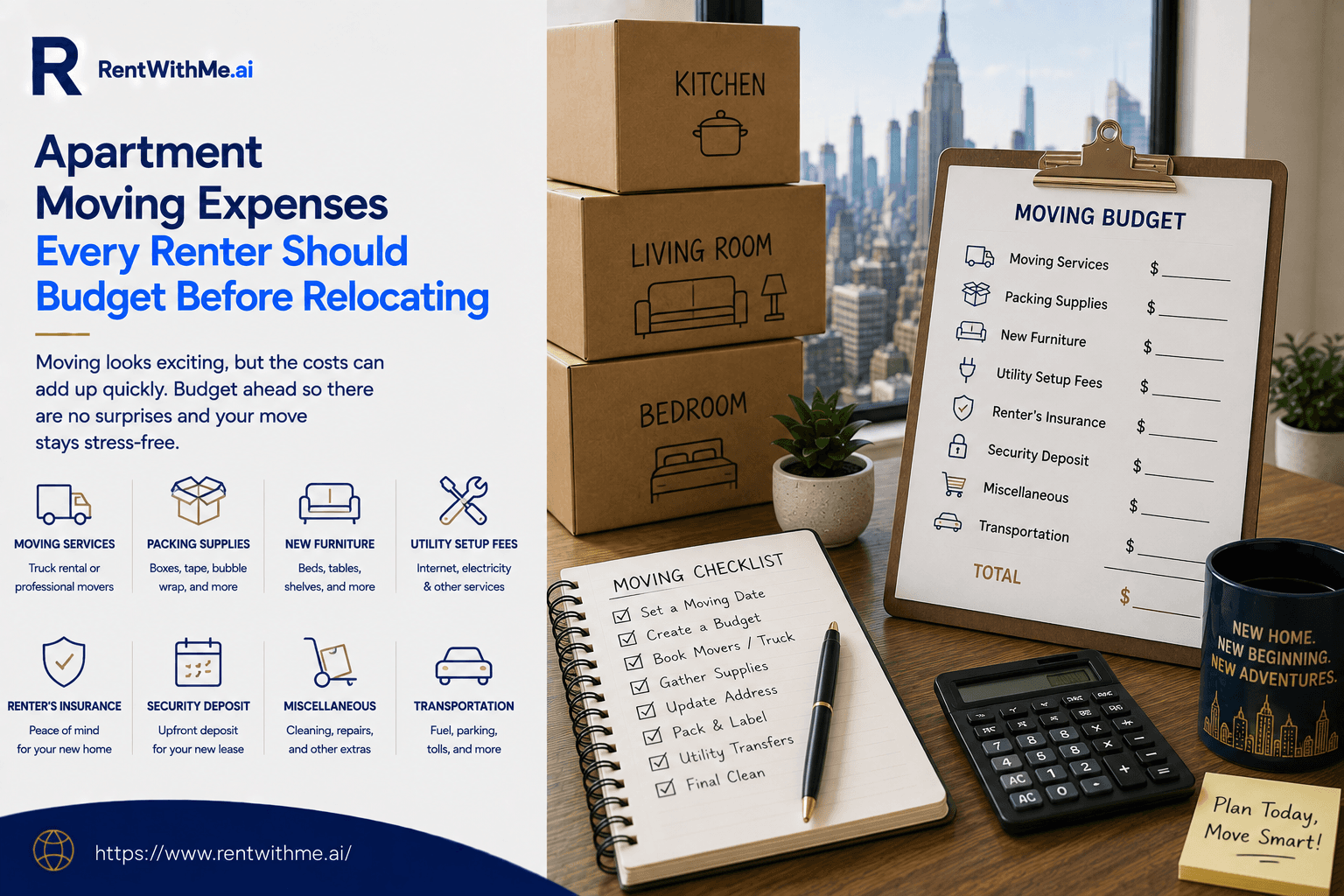
Introduction
Moving into a new apartment can feel like a fresh start, but the financial side of relocating often becomes more complicated than renters expect. Rent may be the largest recurring expense, yet it is only one part of the money needed to move successfully from one home to another.
Professional movers, packing materials, transportation, storage, building requirements, deposits, utility setup, cleaning, and dozens of smaller purchases can quickly add to the total. Even renters who carefully calculate their new monthly rent sometimes underestimate how much cash they will need during the weeks surrounding the move.
This is especially important in New York City, where apartment moves can involve elevators, loading restrictions, limited parking, narrow stairways, building management requirements, and strict moving schedules. A move across the same neighborhood can still involve meaningful costs depending on the properties involved.
A useful moving budget should therefore cover the entire transition rather than focusing only on moving day. It should begin before the lease starts and continue until the renter is fully settled and the financial responsibilities associated with the previous apartment have been resolved.
Planning does not mean predicting every dollar perfectly. It means identifying the expenses most likely to occur, estimating them realistically, and keeping enough flexibility for costs that cannot be known in advance.

Why Moving Costs Are Often Higher Than Renters Expect
Most people picture the visible part of moving first.
They think about hiring movers, renting a truck, or buying boxes. Those expenses matter, but the complete cost of relocation extends much further.
There may be a period when both apartments need to be paid for. Internet service may require installation, furniture might need disassembly, old belongings may require disposal, and the new apartment may need basic household items immediately.
Building-specific requirements can create another layer of costs and logistics. One property may have a straightforward move-in process, while another may require advance reservations, specific moving hours, documentation from the moving company, or coordination with building staff.
The expenses also arrive at different times.
A moving company may require a deposit when the reservation is made. Packing supplies could be purchased weeks before moving day, while the final mover balance, transportation costs, tips, food, and last-minute supplies may all become due within a few hours.
That timing can create financial pressure even when the total budget is technically affordable.
A renter who expects to spend $2,000 on a move but assumes those expenses will be spread over several months may be surprised when most of the money is required within a short period.
Think Beyond the Price of the Moving Truck
The transportation of your belongings is only one component of the move.
Imagine that you receive a moving quote that appears comfortably within budget. Then you discover that packing materials are separate, your building requires a particular moving arrangement, several pieces of furniture need special handling, and you need temporary storage because the lease dates do not align.
Suddenly, the original moving estimate no longer represents the real relocation cost.
This is why a moving budget should be built by category.
Instead of asking, “How much will my move cost?” ask, “What will I need to pay for before, during, and immediately after this move?”
That question produces a much more complete answer.

Creating a Realistic Apartment Moving Budget Before Relocating
Start budgeting as soon as you know a move is likely.
You do not need exact quotes immediately. Early estimates are enough to understand the financial range and identify areas that require additional research.
Begin with the expenses you already know.
These may include your new rent, expected moving date, approximate amount of furniture, distance between apartments, and whether you plan to hire professional movers.
Then add costs that depend on the properties.
Does either building have an elevator?
Are there stairs?
Does management impose specific moving procedures?
Can a truck park conveniently near the entrance?
Will large furniture fit through the new apartment’s doors?
These details influence both price and logistics.
Build Your Budget Around the Entire Moving Period
A useful moving budget can be divided into three stages: before the move, moving day, and after the move.
Before the move, expenses may include packing materials, mover deposits, application-related housing expenses, storage arrangements, cleaning supplies, and advance service bookings.
Moving-day costs may include the mover balance, transportation, parking, tolls, food, tips, additional labor, and emergency purchases.
Afterward, you may still encounter utility setup costs, furniture purchases, household supplies, cleaning expenses, storage fees, and final charges connected with the previous apartment.
Thinking chronologically makes forgotten expenses easier to spot.

Create a Maximum Moving Budget
A target budget tells you what you expect to spend.
A maximum budget tells you how much you can safely afford if things cost more than expected.
Both numbers are useful.
Suppose your target is $2,500.
You might decide that your financial maximum is $3,000, with the additional $500 reserved only for legitimate unexpected costs.
That boundary can prevent convenience purchases from quietly turning into major overspending.
It also helps you make decisions when comparing moving services.
Separate Essential Costs From Optional Costs
Not every moving expense carries the same importance.
Professional transportation may be essential if you have large furniture and no practical way to move it yourself.
Buying matching decorative storage containers for the new apartment is not essential on moving day.
This distinction becomes valuable when the budget becomes tight.
Essential expenses should receive funding first.
Optional upgrades can wait until after you understand your actual relocation costs.
A new apartment does not need to be completely furnished and decorated during the first weekend.

Separating One-Time Moving Costs From Ongoing Housing Costs
A common budgeting mistake is mixing relocation expenses with normal monthly living expenses.
Keep them separate.
Your moving budget should primarily track temporary expenses caused by relocation.
Your housing budget should track recurring costs associated with living in the new apartment.
Some expenses sit between these categories.
For example, internet installation may be a one-time moving expense, while the monthly internet bill belongs in the ongoing household budget.
The same distinction can apply to utility deposits, equipment purchases, renter’s insurance, parking, storage, and other services.
Separating these categories helps you understand whether the apartment remains affordable after the move is finished.
Upfront Costs Can Affect Cash Flow
Even refundable amounts require available money.
A deposit may eventually be returned, but that does not help if you need the money today.
Moving budgets should therefore consider cash flow as well as permanent expenses.
If several deposits are required at the same time, the household may temporarily need considerably more money than the eventual net cost of the move.
Do not remove refundable amounts from your planning simply because you expect to recover them later.
Until the money is actually returned, it remains unavailable for other expenses.

Estimating Professional Moving Company Expenses
Professional movers can simplify relocation considerably, especially when furniture, stairs, elevators, or a large number of boxes are involved.
Pricing varies based on many factors.
Distance matters.
So does the volume of belongings, number of workers, amount of labor, building access, time requirements, specialty items, and services requested.
Rather than relying on a generic average, obtain estimates based on your specific move.
The more accurate the information you provide, the more useful the quote becomes.
Hourly Moving Rates
Some local moves are priced primarily by time.
The moving company may charge an hourly amount based on the size of the crew and other factors.
If your move takes longer than expected, the final price may increase.
That makes preparation financially important.
If boxes are still being packed when movers arrive, time can be wasted on tasks you could have completed beforehand.
Elevator delays, difficult parking, long walks between the truck and building, and disorganized furniture can also extend the job.
Efficiency can therefore affect the bill directly.

Flat-Rate Moving Quotes
Some movers offer a fixed or flat-rate price based on the information provided.
This can make budgeting easier because you have greater certainty about the expected base cost.
However, you still need to understand what the quote includes.
Ask what circumstances can change the price.
Additional items, unexpected stairs, specialty furniture, packing services, excessive waiting time, or changes in the move details may affect the agreement depending on its terms.
Read the estimate rather than relying only on the final number.
Minimum Charges
A short move does not always mean a tiny moving bill.
Some companies have minimum labor periods or minimum charges.
For example, a move that physically takes less time may still be billed according to the company’s minimum booking requirements.
Ask about this before comparing quotes.
A low hourly rate can be misleading if the company requires a larger minimum commitment.
Compare expected total cost rather than one pricing component.
Travel Time and Transportation Charges
Moving companies may calculate travel-related charges differently.
Some incorporate them into the quote.
Others may have separate travel time, mileage, transportation, fuel, or related charges depending on the move and pricing structure.
Ask specifically.
You want to know how the company calculates the time spent getting to the first apartment and returning after the job.
Understanding this before booking makes the final bill more predictable.
Distance Between the Truck and Apartment Matters
Urban moves often involve more than carrying furniture from a door directly into a vehicle.
The truck may need to park down the street.
Movers might travel through a lobby, down a long hallway, into an elevator, through another hallway, and finally into the apartment.
That distance takes time.
When requesting quotes, explain unusual access conditions.
A mover who understands the property layout can provide a more realistic estimate.

Stairs Can Increase Labor
Walk-up apartments deserve special attention.
Moving a sofa, bed, dresser, and dozens of boxes down several flights requires considerably more labor than moving everything through an easily accessible elevator.
The destination matters too.
A move from a fifth-floor walk-up to another walk-up can be physically demanding and time-consuming.
Tell the moving company about stairs at both properties.
Do not wait until moving day for the crew to discover them.
Accurate disclosure protects your budget and helps the mover plan the correct crew.
Elevators Do Not Always Make Moves Faster
An elevator can simplify physical labor, but it can create scheduling constraints.
Some buildings require moves to use a service elevator.
The elevator may need to be reserved.
Other residents or building staff may also need access.
If the elevator is not ready at the scheduled time, movers can end up waiting.
When labor is charged hourly, waiting can increase the final cost.
Confirm elevator arrangements with both properties before moving day.
Specialty Items Can Change the Quote
Some belongings require additional planning.
Large artwork, oversized mirrors, pianos, safes, unusually heavy furniture, fragile antiques, exercise equipment, and certain electronics may need special handling.
Tell the mover about these items during the quote process.
Photographs and dimensions can help when appropriate.
Do not hide difficult items in hopes of keeping the quote low.
Unexpected specialty items can create delays and pricing disputes on moving day.
Furniture Disassembly and Reassembly
Beds, tables, sectional sofas, shelving systems, and other large furniture may need to be taken apart before they can leave the apartment.
Some moving companies include basic disassembly and reassembly.
Others may charge separately or limit what their crews will handle.
Ask in advance.
If you plan to disassemble furniture yourself, complete the work before the movers arrive.
Store screws and small hardware in labeled bags.
Attach or clearly associate each bag with the correct furniture piece.
A few minutes of organization can save considerable frustration at the new apartment.
Get More Than One Moving Quote
Comparing quotes is usually worthwhile.
However, the cheapest estimate is not automatically the best choice.
Compare what each company includes.
A slightly higher quote may include services that another company lists separately.
You should also consider professionalism, communication, documentation, availability, and whether the mover can satisfy building requirements.
Price matters, but reliability matters too.
Compare Moving Quotes Consistently
A simple comparison can prevent misleading decisions.
| Cost Category | Mover A | Mover B | Mover C |
|---|---|---|---|
| Base moving price | Confirm | Confirm | Confirm |
| Minimum charge | Check | Check | Check |
| Travel-related charges | Check | Check | Check |
| Packing materials | Check | Check | Check |
| Furniture handling | Check | Check | Check |
| Stair or access considerations | Check | Check | Check |
| Insurance or valuation options | Check | Check | Check |
| Expected total | Calculate | Calculate | Calculate |
Provide every mover with substantially the same information.
If one company receives a complete inventory while another receives only a rough description, their quotes are not directly comparable.
Budgeting for Packing Supplies and Moving Materials
Packing materials look inexpensive individually.
A few boxes, rolls of tape, and sheets of packing paper may not seem significant.
The total can become surprisingly large once you pack an entire apartment.
Your supply needs depend on the size of the home and the amount of property you own.
Someone moving from a minimally furnished studio may need relatively little.
A family moving from a two-bedroom apartment may need dozens of boxes in different sizes along with substantial protective material.
Plan the supply budget before packing begins.
Moving Boxes
Boxes are one of the most obvious costs.
You may need small boxes for books and heavy items, medium boxes for general household goods, and larger boxes for lightweight belongings.
Specialized boxes may also be useful for televisions, artwork, clothing, dishes, or other fragile items.
Avoid putting extremely heavy belongings into oversized boxes.
A box that cannot be safely lifted is not useful.
Smaller boxes are usually better for books and other dense items.
Reusing Boxes Can Reduce Costs
You do not necessarily need to buy every box.
Clean, sturdy boxes can sometimes be obtained from previous deliveries, friends, workplaces, or local sources.
Inspect them carefully.
Avoid boxes that are wet, damaged, contaminated, or structurally weak.
Fragile and valuable belongings deserve reliable packaging.
Saving a few dollars is not worthwhile if the box fails while being carried.
Packing Tape and Labeling Supplies
Tape disappears faster than many people expect.
Budget for enough quality packing tape to seal boxes securely.
You may also need markers, labels, removable stickers, or another simple identification system.
Clear labeling saves time at the destination.
Instead of writing only “Bedroom,” consider adding a brief description such as “Bedroom, bedding” or “Bedroom, desk supplies.”
Movers can place boxes more accurately, and you can prioritize unpacking.
Protective Packing Materials
Fragile possessions may require packing paper, bubble-style cushioning, foam, protective sleeves, or other appropriate materials.
Furniture may need moving blankets or protective wrap.
If you hire movers, ask which protective materials they provide and which may create additional charges.
Do not buy large quantities until you know what is already included.
Duplicate purchases waste money.
Specialty Packing Supplies
Certain belongings require specialized packaging.
Televisions, large monitors, framed artwork, mirrors, glassware, dishes, and valuable electronics may benefit from purpose-built containers or additional protection.
Prioritize based on replacement cost and fragility.
You do not need premium packaging for every possession.
Spend more protection money where damage would be expensive or difficult to repair.
Decluttering Can Reduce Packing Expenses
Every item you remove before moving is one less item to pack, carry, transport, and unpack.
Decluttering can therefore reduce several costs simultaneously.
It may reduce the number of boxes required.
It can also shorten professional moving time and reduce storage needs.
Begin early enough to make thoughtful decisions.
Throwing everything into boxes because moving day is tomorrow usually results in paying to transport items you no longer want.
Avoid Buying Supplies Too Early in Huge Quantities
Bulk purchases can appear economical.
They become wasteful when you overestimate your needs.
Start with a reasonable quantity.
Track how quickly supplies are being used.
Purchase additional materials as necessary.
Keep receipts when return policies allow unused supplies to be returned.
This keeps the packing budget flexible.
Accounting for Furniture Disassembly and Reassembly
Furniture deserves its own section in the moving budget because it affects labor, time, packing, and sometimes replacement decisions.
Measure large items before moving day.
A sofa that fit comfortably through the old building’s doorway may not fit through the new one.
Measure doorways, elevators, hallways, and relevant furniture dimensions when there is any doubt.
Finding out before moving day gives you options.
Discovering the problem while movers are standing in the hallway can become expensive.
Decide Whether the Furniture Is Worth Moving
Some inexpensive furniture costs almost as much to move as it would to replace.
That does not mean you should automatically discard it.
Compare the real costs.
Consider the furniture’s condition, replacement price, transportation difficulty, sentimental value, and whether it fits the new apartment.
Selling, donating, or responsibly disposing of an item before moving can sometimes reduce expenses.
In other cases, replacing furniture would cost far more than transporting it.
Evaluate each large piece individually.
Account for Assembly Time
Flat-pack furniture can be particularly time-consuming.
Some pieces are not designed to be repeatedly disassembled and reassembled.
Ask whether your movers handle the specific type of furniture.
If they do, determine whether assembly time is included in the quote.
If you handle it yourself, give yourself enough time.
Trying to rebuild a bed at midnight after an exhausting move is rarely ideal.
Budgeting for Elevator Reservations and Building Requirements
Apartment buildings can have detailed moving procedures.
Before hiring movers, contact management at both the current and future properties.
Ask about permitted moving days and hours.
Confirm whether an elevator must be reserved.
Find out where the truck can load or unload.
Ask whether management needs information from the moving company.
These rules affect scheduling and can sometimes affect cost.
Understand Building Move-In and Move-Out Procedures
Some properties have specific requirements intended to protect elevators, hallways, floors, and other common areas.
The exact process varies by building.
Do not assume the new building follows the same procedures as the old one.
Request instructions in writing when possible.
Share relevant requirements with your mover.
A professional crew needs to know about time windows, elevator access, loading locations, and documentation before arriving.
Ask About Move-Related Fees
Some buildings may charge move-related fees or deposits depending on the property and applicable rules.
Confirm the amount and purpose directly with management.
Ask whether a payment is refundable.
If it is refundable, determine the conditions for receiving the money back.
Add the amount to your cash-flow plan even if you expect a refund.
Money temporarily tied up in a deposit is still unavailable for other moving expenses.
Planning for Deposits and Certificates of Insurance
A building may require a moving company to provide proof of insurance, commonly handled through a certificate of insurance, often called a COI.
The document typically demonstrates that the moving company maintains specified insurance coverage.
Ask management for the exact requirements.
Then send those requirements to the mover well before moving day.
Do not assume every moving company’s standard certificate automatically satisfies every building.
Property management may have specific wording or coverage requirements.
Confirm Documentation Early
A documentation problem can stop or delay a move.
Imagine that movers arrive at 9:00 a.m., but the building will not allow them to begin because required insurance documentation is missing.
If the movers charge by time, the delay may become financially painful.
Avoid this situation by confirming approval in advance.
Ask whether management has received and accepted all required paperwork.
A short email several days before the move can prevent a major problem.
Calculating Transportation, Parking, Tolls, and Fuel Expenses
Transportation expenses depend on how you are moving.
Professional movers may incorporate some transportation costs into their pricing.
DIY movers may need to budget separately for truck rental, fuel, tolls, parking, mileage, and potentially additional insurance or equipment.
Read the rental agreement carefully.
A low advertised truck price does not necessarily represent the final cost.
Mileage and other charges can change the total considerably.
Budget for Parking Challenges
Parking can affect both DIY and professional moves.
A truck that cannot stop near the building may require a much longer carry.
That increases physical effort and can extend labor time.
Research the loading situation at both addresses.
Follow applicable parking and traffic rules.
Do not build a moving plan around illegal parking and assume everything will work out.
Include Tolls in Longer Moves
If the route crosses tolled roads, bridges, or tunnels, include those costs.
The moving company’s treatment of tolls may differ from a self-drive rental truck.
Ask whether they are included in the estimate.
For a DIY move, research the expected route in advance.
Small transportation charges can accumulate quickly when multiple trips are required.
DIY Truck Rental Costs Go Beyond the Daily Rate
The advertised truck rental rate may be only one component.
Potential costs can include mileage, fuel, insurance options, equipment rental, taxes, tolls, and additional time.
You may also need moving blankets, dollies, hand trucks, straps, or other equipment.
Calculate the expected complete cost before deciding that DIY is automatically cheaper.
Your time and physical capability matter too.
Understanding Storage Costs Before, During, or After the Move
Storage can become necessary when lease dates do not align.
You may also need it when downsizing or moving into a temporary apartment.
Storage costs should be planned carefully because a short-term solution can become a long-term recurring expense.
Ask how the facility calculates monthly charges.
Check access hours, insurance requirements, security features, climate conditions, and any administrative fees.
Understand how introductory pricing works.
A low first-month rate is less meaningful if the long-term cost is substantially higher.
Choose Storage Size Carefully
Renting too much space wastes money.
Renting too little can create another problem if everything does not fit.
Create a rough inventory.
Ask the storage provider about appropriate unit sizes.
Think about how items will be arranged.
If you need frequent access, you may require extra walking space.
If everything will remain untouched until removal, tighter packing may be practical.
Consider Transportation to and From Storage
The monthly storage price is not the whole cost.
Your belongings need to reach the facility.
Later, they need to leave.
That can mean additional mover time, truck rental, fuel, or another professional moving appointment.
Include both transportation stages in the budget.
A storage facility with a slightly higher monthly rate but a much more convenient location could potentially reduce transportation costs.
Evaluate the complete arrangement.
Common Moving Expenses Renters Forget to Include
Small overlooked expenses are often what push a moving budget beyond expectations.
The mover may have been budgeted accurately, yet the household still overspends because dozens of secondary purchases were never considered.
Common examples include replacement keys, packing supplies, parking costs, cleaning products, meals, temporary storage, basic tools, furniture protection, utility setup, and household items needed immediately after arrival.
Not every renter will face all of these costs.
The important point is to create room for them.
Last-Minute Packing Supplies
People frequently underestimate the final ten percent of packing.
You think everything is boxed.
Then you discover kitchen drawers, cleaning supplies, bathroom cabinets, shoes, chargers, tools, and miscellaneous belongings that still need containers.
Keep a small packing reserve in the budget.
Buying two extra rolls of tape and several boxes is not a financial disaster.
The problem occurs when the budget has no flexibility at all.
Food During the Move
Moving disrupts normal cooking.
The refrigerator may be empty.
Kitchen equipment may be packed.
You may spend the entire day traveling between apartments.
Takeout, coffee, bottled drinks, snacks, and quick meals can become more expensive than expected when several people are involved.
Budget for food rather than pretending you will maintain your normal meal routine throughout the busiest moving days.
Basic Tools and Hardware
You may need screwdrivers, picture-hanging supplies, furniture hardware, extension solutions appropriate for your setup, felt pads, shelf liners, or other small household items.
Individually, these purchases may seem minor.
Collectively, they can add a meaningful amount to the first-week budget.
Avoid buying everything preemptively.
Wait until you know what the new apartment actually requires.
Disposal Costs
Not everything will move with you.
Large unwanted furniture, damaged items, and accumulated belongings may require proper disposal.
Follow building and local disposal rules.
Do not assume you can leave unwanted furniture on the sidewalk whenever convenient.
Ask management about procedures before move-out.
If professional removal is required, include it in the budget.
Time Off Work
Moving can create an indirect financial cost.
Some renters need to take unpaid time away from work.
Others use paid leave that could have been used for another purpose.
Consider whether moving on a weekday creates an income impact.
Sometimes paying slightly more for a convenient moving date can still make financial sense if it prevents lost earnings.
Evaluate the complete picture.
Preparing for the Next Stage of Your Moving Budget
By this point, the core physical costs of relocation should be becoming clearer.
You have considered professional movers, labor structure, packing materials, furniture handling, building procedures, documentation, transportation, parking, tolls, storage, and several easily forgotten expenses.
However, those costs still do not represent the entire move.
The next stage involves expenses that often sit outside the moving truck itself: overlapping rent, security deposits, utility transfers, internet installation, cleaning, minor repairs, moving coverage, gratuities, temporary care for children or pets, meals, new household essentials, and an emergency reserve.
These categories can determine whether a carefully planned move stays financially comfortable or becomes stressful during the final days.
Budgeting for Overlapping Rent Between Apartments
One of the largest relocation expenses may have nothing to do with the moving company. When the old lease ends after the new lease begins, renters can temporarily become responsible for two apartments at the same time.
An overlap is not necessarily a bad thing. Having access to both apartments for several days can make packing, cleaning, internet installation, inspections, and the physical move significantly easier.
The financial impact depends on how long the overlap lasts. A few days may be manageable, while several weeks can add a substantial amount to the total relocation budget.
Before signing a new lease, compare the new start date with the final date of your existing tenancy. Treat any unavoidable overlap as a moving expense instead of pretending it belongs only in the normal rent budget.
Decide Whether a Short Overlap Is Worth the Cost
Moving directly from one apartment into another on the same day can reduce overlapping housing costs, but it creates a demanding schedule.
Everything must work correctly.
The old apartment needs to be packed, the movers need to arrive on time, the new apartment must be accessible, building schedules need to align, and essential services should be ready.
A short overlap creates breathing room.
You may be able to receive keys, inspect the apartment, activate internet, clean before furniture arrives, and move fragile belongings separately.
Compare the financial cost with the practical benefit.
Saving several days of overlapping rent may not be worthwhile if it forces you into temporary storage, an additional moving trip, or a hotel because the dates cannot be coordinated.
Watch for a Gap Between Leases
The opposite problem can also occur.
Your existing tenancy may end before the new apartment becomes available.
A one-day or several-day gap can require temporary accommodations and storage.
That can create several additional expenses at once.
Your belongings may need to be moved into storage, transported again later, and handled twice.
You may need a hotel or another temporary place to stay.
Pets, children, work equipment, and essential personal belongings create additional logistical challenges.
When comparing apartment availability dates, calculate the financial effect of the gap rather than looking only at the new monthly rent.
Planning for Security Deposits and Upfront Rental Costs
A new apartment can require significant upfront cash in addition to relocation expenses.
Depending on the rental arrangement and applicable rules, renters may need to prepare for the first month’s rent, a security deposit, and other legitimate costs associated with securing the apartment.
For NYC renters, current rules matter. New York State generally limits residential security deposits to no more than one month’s rent, and New York City has additional rules governing certain rental application and broker-related charges.
Because rental regulations can change and individual arrangements differ, verify current requirements through official New York sources before paying substantial fees.
The key budgeting principle is simple.
Do not spend your entire available cash reserve on movers and furniture while forgetting the money required to secure the apartment itself.
Treat Refundable Deposits as Cash Requirements
A security deposit may eventually be returned, assuming applicable requirements are satisfied.
That does not make it irrelevant to your moving budget.
The money leaves your available funds when you move in.
Meanwhile, the security deposit from your previous apartment may not have been returned yet.
For a period of time, you may effectively have money tied up in both apartments.
Build your cash-flow plan around that possibility.
Do not assume the previous deposit will arrive in time to fund the new one.
Keep Housing Payments Separate From Moving Purchases
Once a new lease is signed, it can be tempting to begin buying furniture and household items immediately.
Protect your essential housing funds first.
Set aside the money needed for required rent, legitimate deposits, moving services, utilities, and other unavoidable expenses.
Decorating can happen gradually.
Being able to comfortably complete the move matters more than having a fully furnished apartment during the first week.
Accounting for Utility Transfers, Activation Fees, and Deposits
Utilities can create both one-time and recurring expenses.
Before moving, determine which services are included in the rent and which ones you must establish independently.
Electricity, gas where applicable, internet, and other tenant-managed services may involve account setup procedures.
Depending on the provider and individual account circumstances, deposits or activation-related charges may apply.
Do not assume every utility simply transfers at no cost.
Check with the provider.
Keep Old Utilities Active Long Enough
Turning off service too early can create problems.
You may still need electricity in the old apartment for cleaning, final packing, inspections, or repairs.
If your leases overlap, maintaining essential utilities at both apartments for a short period may be practical.
Include that overlap in your budget.
The cost may be relatively small compared with the inconvenience of trying to clean an apartment without lights or electricity.
Choose termination dates based on when your responsibility actually ends and when you no longer need the service.
Review Final Utility Bills
Moving does not automatically end an account.
Confirm the termination date directly with each applicable provider.
Save confirmation information.
When the final bill arrives, check the service dates and charges.
A billing problem is much easier to address when you have clear documentation showing when service was supposed to end.
Budgeting for Internet Installation and Equipment
Home internet has become an essential moving expense for many households.
Remote workers may need it immediately.
Families may depend on it for school, communication, entertainment, and everyday household tasks.
Before moving, check which providers serve the exact apartment.
Do not assume that a provider available in the neighborhood can serve your specific building or unit.
Compare installation charges, monthly pricing, equipment fees, promotional terms, and expected long-term cost.
Schedule Installation Before You Need It
If professional installation is necessary, arrange the appointment early.
Waiting until after move-in can leave you without reliable service for several days.
This is particularly important if building management must provide access to a telecommunications room or another restricted area.
Ask whether self-installation is available.
It may reduce costs if the apartment already has compatible infrastructure.
However, do not choose self-installation merely to save money if the connection actually requires professional work.
Include Router and Equipment Costs
Some providers rent equipment for a recurring monthly fee.
Others may include certain hardware in the plan.
You may also have the option to purchase compatible equipment yourself.
Compare the long-term cost before deciding.
A personally owned router can be worthwhile, but only when it is compatible with the service and appropriate for the apartment.
Do not buy expensive networking hardware before confirming the connection type.
Estimating Professional Cleaning Costs
Cleaning is another expense renters often underestimate.
You may need to clean the old apartment thoroughly while also preparing the new apartment for occupancy.
Some renters handle both tasks themselves.
Others hire professional cleaners because moving leaves little time or energy for a detailed clean.
If you are considering professional cleaning, request pricing based on the apartment size and required work.
A routine clean and an intensive move-out clean may be priced differently.
Decide Which Apartment Needs Professional Cleaning Most
You may not need professional service at both properties.
If the new apartment has already been professionally prepared, a light personal clean may be sufficient.
The old apartment may require more attention after furniture is removed.
Alternatively, you may prefer to clean the old apartment yourself and hire someone to prepare the new home before move-in.
Choose based on time, condition, budget, and lease obligations.
Do not automatically pay for every possible convenience.
Cleaning Supplies Still Cost Money
DIY cleaning is cheaper than professional service in many cases, but it is not free.
You may need trash bags, cleaning solutions, sponges, gloves, paper products, floor supplies, and other materials.
Check what you already own before buying more.
Pack essential cleaning supplies separately rather than burying them in a moving box.
You will probably need them at both ends of the move.
Planning for Repairs, Wall Restoration, and Minor Move-Out Work
The old apartment may require some attention after your belongings are removed.
Review your lease and the condition of the property.
Ordinary wear and actual tenant-caused damage are not the same thing, and applicable laws and lease terms can affect responsibility.
Do not automatically pay to repair every minor sign of occupancy.
At the same time, do not ignore damage you are legitimately responsible for addressing.
Document the apartment’s condition carefully.
Remove Personal Installations Properly
Wall-mounted televisions, shelving, hooks, brackets, smart devices, and other tenant-installed items may need to be removed.
Follow your lease and management instructions.
If restoration is required, determine whether you can perform the work properly yourself.
Poor DIY repairs can create more work rather than less.
If you are uncertain about significant repairs, ask management what is expected before spending money.
Budget for Small Repair Materials
Minor restoration can require inexpensive materials such as appropriate patching products or replacement hardware.
The cost may be small, but it belongs in the moving budget.
Avoid buying large quantities of repair supplies until you know what work is actually required.
Also photograph the apartment after your belongings are removed and appropriate cleaning or repairs are complete.
Documentation can be valuable if questions arise later.
Understanding Moving Insurance and Valuation Coverage
Damage protection deserves careful attention when hiring professional movers.
Moving companies may provide different levels or forms of liability or valuation coverage depending on the move and applicable regulations.
Do not assume that every damaged item will automatically be reimbursed at its full replacement value.
Ask the mover to explain the available protection clearly.
Read the written terms.
If you own expensive furniture, electronics, artwork, or other valuable property, understanding coverage before moving day is particularly important.
Check Your Existing Insurance
Some renters insurance policies may provide certain types of protection related to moving, while exclusions and limits can vary considerably.
Contact your insurer before assuming coverage exists.
Ask what happens while belongings are being transported.
Find out whether theft, breakage, storage, or temporary accommodations are covered under your policy and under what circumstances.
Do not purchase overlapping protection blindly.
Understand what you already have first.
Document Valuable Belongings
Take photographs of valuable items before the move.
Record serial numbers for important electronics where useful.
Keep purchase information for high-value belongings when available.
This documentation does not prevent damage.
It can make a claim easier to explain if something happens.
Pack sensitive documents and irreplaceable small valuables separately rather than placing them casually in general moving boxes.
Budgeting for Tips and Additional Mover Charges
Gratuities are another moving-day expense renters may want to consider when building the budget.
Whether and how much you choose to tip can depend on the service, local norms, complexity of the move, and your own judgment.
The important budgeting point is to decide beforehand whether you expect to provide a gratuity.
Do not reach the end of the move and discover that you never accounted for it.
Keep any planned amount separate from the base moving payment.
Understand What Can Increase the Final Moving Bill
The quoted amount may not always be the final amount if the scope of work changes.
Additional belongings, unexpected stairs, long waiting periods, extra packing, specialty items, or changes to the destination can affect pricing depending on the agreement.
Read the estimate carefully.
Ask what is included.
Provide an accurate inventory.
The more complete the information you give before moving day, the lower the chance of a surprise caused by a legitimate change in scope.
Accounting for Childcare, Pet Care, and Temporary Help
Moving day can be difficult for young children and pets.
Open doors, unfamiliar workers, stacked boxes, and constant movement can create safety and stress concerns.
Some households arrange childcare or pet care during the busiest part of the move.
That expense should be included in the relocation budget.
Even a few hours of assistance may make the process considerably easier.
Pet-Related Moving Expenses
Pets can create additional costs beyond temporary care.
You may need a carrier, travel supplies, updated identification, cleaning materials, or other move-specific items.
If the pet becomes anxious during travel, discuss appropriate planning with your veterinarian well before moving day.
Do not wait until the morning of the move to solve transportation issues.
Prepare a small pet bag with food, water, medication where applicable, and essential supplies.
Keep it with you rather than loading it deep inside the moving truck.
Temporary Help From Friends Still Has Costs
Friends and relatives may help you move without charging for labor.
That can reduce expenses significantly.
However, you may still need transportation, food, equipment, parking, or supplies.
Be realistic about what volunteer help can accomplish safely.
Moving large furniture through stairways is physically demanding.
Saving money is not worth causing an injury or damaging the building.
Planning for Meals, Takeout, and Moving-Day Convenience Costs
Food is one of the easiest moving expenses to overlook.
During the final days before relocation, your kitchen may be partially packed.
After moving, you may not immediately know where cookware, dishes, or groceries are.
That often leads to several days of takeout.
A few restaurant or delivery orders can become expensive, especially for a family.
Include food in the moving budget intentionally.
Use Up Food Before Moving
Reducing the contents of the refrigerator, freezer, and pantry can lower waste.
Plan meals around what you already have during the final week.
Avoid a large grocery trip immediately before moving.
You will have less food to transport and fewer refrigerated items to manage.
Do not compromise food safety simply to avoid waste.
Perishable food that cannot be transported safely should be handled appropriately.
Prepare a First-Night Food Plan
Know what you will eat after the move.
The plan does not need to be elaborate.
You might keep simple food accessible, purchase a small amount of groceries after arriving, or intentionally budget for one delivery meal.
Planning prevents repeated impulse spending.
The same principle applies to coffee, bottled beverages, and snacks during moving day.
Small convenience purchases can accumulate quickly.
Budgeting for New Furniture and Household Supplies
A new apartment often creates the urge to buy everything immediately.
The floor plan is different.
You may need curtains, storage, lighting, seating, kitchen items, or other household products.
Some purchases will be genuinely necessary.
Others can wait.
Create separate categories for “needed immediately” and “can purchase later.”
This prevents decorating enthusiasm from consuming money reserved for essential relocation expenses.
Measure Before Buying Furniture
Do not order furniture based only on how much space appears to be available.
Measure the room.
Measure doors, hallways, elevator openings, and any tight turns along the delivery route.
An oversized sofa that cannot reach the living room creates an expensive problem.
Measurements also help you avoid buying too much furniture for a smaller apartment.
Living in the space for a few weeks can reveal what you actually need.
Prioritize Functional Essentials
A renter moving into an unfurnished apartment may need several basic items quickly.
Focus first on sleep, food preparation, lighting, hygiene, work, and basic storage.
Decorative purchases can happen gradually.
This approach protects the moving budget.
It also gives you time to understand how the apartment functions before filling it with furniture.
Expect Small Household Purchases
The expensive furniture receives attention, but smaller items can quietly consume hundreds of dollars.
You may discover that you need trash cans, shower supplies, hangers, cleaning products, basic tools, light bulbs where tenant replacement is appropriate, kitchen organizers, and storage containers.
Do not assume you will need all of them.
Create a running list after moving in.
Buy based on actual need.
Managing Unexpected Expenses With a Moving Contingency Fund
No moving budget can predict everything.
A piece of furniture may need special handling.
A truck may take longer than expected.
You may need additional boxes.
An installation appointment could be delayed.
Storage may be necessary for several extra days.
A contingency fund protects the rest of your finances from these surprises.
Instead of treating unexpected costs as emergencies, you have already allocated money for uncertainty.
How Large Should the Contingency Be?
There is no percentage that works for every move.
The appropriate reserve depends on the complexity of the relocation and your financial situation.
A straightforward move between nearby apartments with little furniture has less uncertainty than a large household move involving storage, difficult building access, multiple service appointments, and lease-date complications.
One practical approach is to estimate all known expenses first and then add a separate reserve that you would be comfortable using if necessary.
Keep it distinct from your ordinary spending money.
If the reserve is not needed, it remains yours after the move.
Build the Budget in Layers
A layered moving budget can make decisions easier.
| Budget Layer | Examples | Priority |
|---|---|---|
| Essential housing | Required rent, legitimate deposits | Highest |
| Core relocation | Movers, truck, packing, transportation | High |
| Setup costs | Utilities, internet, essential household supplies | High |
| Convenience | Cleaning help, food delivery, optional assistance | Medium |
| New-home upgrades | Furniture, décor, organizational products | Flexible |
| Contingency | Unplanned but necessary costs | Protected reserve |
This structure prevents optional spending from competing with essential expenses.
If the moving company costs more than expected, decorative purchases can be delayed rather than taking money from rent or the emergency reserve.
How to Reduce Moving Expenses Before Moving Day
The most effective cost reduction usually happens before the movers arrive.
Decluttering can reduce the volume of belongings.
Packing yourself can reduce labor.
Scheduling carefully can prevent waiting time.
Comparing quotes can reveal meaningful price differences.
However, saving money should not become the only objective.
The cheapest approach can become expensive if it results in damaged belongings, unsafe lifting, missed work, repeated truck trips, or building penalties.
Reduce unnecessary costs rather than necessary protection.
Declutter With Enough Time to Make Good Decisions
Start several weeks before moving if possible.
Separate belongings you definitely want from items you no longer use.
Sell valuable unwanted possessions early enough to find buyers.
Donate appropriate items according to the receiving organization’s requirements.
Dispose of unusable belongings properly.
The closer you get to moving day, the fewer options you have.
Last-minute disposal can become both stressful and expensive.
Pack Most Ordinary Belongings Yourself
Professional packing can be valuable for fragile, high-value, or complicated belongings.
For ordinary clothing, books, linens, and household goods, many renters can pack themselves.
Begin early.
Pack low-use items first.
Leave daily essentials until the final days.
A gradual process reduces the chance that movers arrive while half the apartment is still unpacked.
Keep an Inventory
A basic inventory helps with both moving quotes and unpacking.
You do not need to document every spoon.
Focus on furniture, electronics, major boxes, specialty items, and valuable belongings.
An accurate inventory makes mover estimates more reliable.
It can also reveal how much you own before you start purchasing packing supplies.
Tracking Your Moving Expenses
Budget estimates are useful only if you compare them with actual spending.
Create a simple moving expense tracker.
Record each purchase when it happens.
Separate estimated and actual amounts.
This helps you see which categories are consuming more money than expected.
If packing supplies exceed the estimate, you can compensate by delaying optional furniture purchases.
Budgeting becomes an active process rather than a document you created once and forgot.
Save Receipts and Confirmations
Keep moving-related receipts together.
Digital copies can be particularly useful.
Save mover estimates, deposits, storage agreements, equipment-return confirmations, cleaning invoices, and relevant utility records.
You may need some of these documents later.
They also help you understand the true cost of the move after everything is complete.
That information can make your next relocation easier to budget.
Preparing for the Final Stage of Your Moving Budget
At this stage, the relocation budget covers far more than boxes and a moving truck.
You have accounted for potential rent overlap, upfront housing costs, utilities, internet, cleaning, repairs, protection for belongings, mover-related extras, childcare or pet care, meals, furniture, household essentials, and a contingency reserve.
The remaining challenge is turning all of those categories into a practical plan.
Different renters will arrive at very different totals.
A solo renter moving a few blocks with minimal furniture may have a relatively simple budget, while a family moving between larger NYC apartments may face substantially more labor, supplies, setup costs, and logistical requirements.
Real-Life Moving Budget Examples for Different Types of Renters
Moving expenses make more sense when they are applied to realistic situations. The total can vary dramatically depending on apartment size, distance, building access, furniture volume, lease overlap, and how much help the renter hires.
The following examples are not fixed price estimates. They are planning models that show how different categories can combine into a realistic relocation budget.
A Solo Renter Moving From a Studio
Consider a renter moving from one small NYC studio to another nearby apartment.
The renter owns a bed, desk, television, small sofa, clothing, kitchenware, and roughly two dozen boxes. Both buildings have elevators, and the new apartment becomes available several days before the old lease ends.
The renter packs independently and hires professional movers for transportation and furniture handling.
A practical budget may include the moving company, packing materials, short-term rent overlap, food on moving day, minor cleaning supplies, internet setup, and a small contingency reserve.
Because the move is relatively simple, storage, specialty handling, and extensive furniture replacement may not be necessary.
The renter still benefits from keeping the budget broader than the mover quote alone.
A Couple Moving From a One-Bedroom Apartment
A couple moving from a one-bedroom apartment may have substantially more belongings.
Furniture volume is larger, two wardrobes need to be packed, and the household owns more kitchen equipment, electronics, and decorative items.
The couple also decides to hire a professional cleaning service after movers leave.
Their budget therefore needs to include mover labor, packing supplies, cleaning, short-term utility overlap, internet installation, food, potential gratuities, and several household purchases after arrival.
The move may still be local.
However, the overall expense can be meaningfully higher simply because the number of belongings and services has increased.
A Family Moving From a Two-Bedroom Apartment
Families often have the most complicated moving budgets.
There may be more furniture, children’s belongings, additional packing materials, larger moving crews, childcare, pet care, several days of takeout, and a need to maintain more reliable overlap between the two homes.
The family may also need professional packing for fragile items or temporary storage if the move dates do not align perfectly.
A contingency fund becomes especially important.
When many people depend on the move going smoothly, solving an unexpected problem often costs money.
The family should budget for flexibility rather than trying to reduce every category to its absolute minimum.
A Renter Moving From a Walk-Up
A walk-up move can cost more than the short distance between apartments would suggest.
Furniture and boxes must be carried down several flights.
The move may take longer, require a larger crew, or involve additional labor considerations depending on the company.
The destination matters too.
A move from a fourth-floor walk-up into another walk-up creates much more labor than moving into a building with a service elevator.
The renter should describe both properties accurately when requesting quotes.
Trying to obtain a lower estimate by omitting stair information can create conflict on moving day.
A Renter With a Gap Between Leases
Suppose the old apartment must be surrendered on Friday, but the new lease does not begin until Monday.
The renter cannot simply leave everything in the moving truck for several days.
Temporary storage becomes necessary.
The renter may also need lodging and possibly additional mover handling because belongings are loaded once into storage and again into the new apartment.
This gap creates a combination of costs rather than one isolated expense.
It shows why lease timing should be considered before the new apartment is finalized.
Frequently Asked Questions About Apartment Moving Expenses
Moving budgets generate many questions because there is no universal price that applies to every renter.
The right answer depends on how much is being moved, where it is going, how difficult the buildings are to access, and which services the renter chooses to purchase.
How Much Should I Budget for an Apartment Move?
There is no single amount that works for everyone.
Start by estimating the core mover or truck cost.
Then add packing materials, building requirements, transportation, utility setup, cleaning, food, storage if necessary, and a contingency reserve.
Also consider costs unrelated to the physical move, such as rent overlap and new-home essentials.
The more complex the move, the larger the reserve should be.
Is Moving Within NYC Always Expensive?
Not necessarily.
A renter moving a lightly furnished studio between nearby elevator buildings may have a relatively straightforward move.
A renter relocating the same distance from a large walk-up with heavy furniture may face much more labor.
Distance matters, but building access, belongings, scheduling, and services can matter just as much.
That is why generic citywide averages can be misleading for individual renters.
Is It Cheaper to Move on a Weekday?
Possibly, depending on the mover and building availability.
Some companies may price busy dates differently, while certain buildings restrict moves to weekdays.
The financial decision should also consider lost work time.
Saving money on the mover does not necessarily help if taking an unpaid weekday off costs more than the discount.
Compare the complete financial effect.
Are Moving Quotes Usually Final?
Not always.
It depends on the type of estimate, company, agreement, and whether the actual move matches the information originally provided.
Changes in inventory, stairs, travel, packing, waiting time, specialty items, or other factors can potentially affect the final cost.
Read the estimate carefully.
Ask what can change the price.
Provide complete information from the beginning.
Should I Tip Movers?
Gratuity is generally a personal decision based on service and customary practice.
If you plan to tip, include the amount in your budget before moving day.
Do not confuse gratuity with the agreed moving charge or required fees.
The exact amount can depend on the complexity and quality of the service.
Should I Hire Professional Packers?
Professional packing can save significant time and may be useful for fragile, valuable, or complex households.
It also increases the moving budget.
Many renters choose a hybrid approach.
They pack ordinary clothing, books, linens, and household goods themselves while paying professionals to handle televisions, artwork, glassware, or particularly fragile belongings.
This can balance protection with cost control.
Is Storage Worth Paying For?
Storage is useful when it solves a real logistical problem.
It may be necessary when lease dates do not align or when the new apartment cannot immediately accommodate all belongings.
It becomes less useful when it turns into indefinite storage for items the renter no longer needs.
Calculate the monthly cost and transportation expenses.
Sometimes decluttering aggressively before the move is cheaper than paying to store low-value belongings for years.
Should I Buy New Furniture Before Moving?
Usually, it is better to wait unless the item is immediately necessary.
Measurements can be misleading until you experience the actual layout.
Living in the apartment briefly can reveal which furniture would genuinely improve the space.
Delaying optional purchases also protects cash during the expensive moving period.
Prioritize essential furniture first.
Complete Apartment Moving Expense Checklist
Use this checklist as a master budgeting reference.
- New apartment rent due before or at move-in
- Security deposit where applicable
- Any legitimate rental-related upfront charges
- Overlapping rent between apartments
- Temporary lodging if lease dates do not align
- Professional moving company deposit
- Remaining mover balance
- Hourly or flat-rate moving charges
- Travel-related moving charges
- Stair or access-related considerations
- Furniture disassembly and reassembly
- Specialty-item handling
- Professional packing if used
- Moving boxes
- Packing tape
- Protective materials
- Specialty television or artwork boxes
- Labels and markers
- Furniture protection materials
- Truck rental for DIY moves
- Mileage charges
- Fuel
- Tolls
- Parking-related expenses
- Moving equipment rental
- Building move-related charges if applicable
- Elevator reservation requirements
- Refundable building deposits if applicable
- Storage unit rental
- Transportation to and from storage
- Electricity overlap
- Gas setup where applicable
- Utility deposits or activation charges
- Internet installation
- Router or equipment costs
- Old internet equipment return
- Professional cleaning
- DIY cleaning supplies
- Minor move-out repair materials
- Moving insurance or valuation upgrades
- Renters insurance adjustments
- Gratuities if planned
- Childcare
- Pet care
- Pet transportation supplies
- Food and drinks on moving day
- Takeout during the final packing days
- First-night groceries
- Basic tools
- Replacement keys or access devices if needed
- Essential new furniture
- Curtains or basic window coverings if necessary
- Household cleaning products
- Bathroom essentials
- Kitchen essentials
- Storage or organization items
- Unexpected transportation expenses
- Contingency reserve
Not every category will apply to every move.
The value of the checklist is that it forces you to consider each potential cost before the final week.
Hidden Moving Costs Renters Commonly Miss
The largest expenses are usually visible.
The smaller ones are what create budget creep.
A renter may estimate movers perfectly but forget three days of takeout, additional packing supplies, storage accessories, parking, cleaning products, utility activation, and replacement household items.
Each cost may be modest.
Together, they can add hundreds of dollars or more.
Replacing Things You Thought You Already Owned
Moves reveal how many household items quietly belong to the apartment rather than to you.
You may discover that the old home had built-in shelving, window coverings, light fixtures, or other features you took for granted.
The new apartment may require alternatives.
Do not buy them all immediately.
Create a list after moving in.
Separate true necessities from upgrades that can wait.
Duplicate Purchases
Disorganized packing can create unnecessary spending.
You may buy scissors because you cannot find yours.
Then you purchase chargers, cleaning products, food storage containers, or tools that are already packed somewhere.
Good labeling prevents some of these duplicate expenses.
The easier it is to locate important belongings, the less likely you are to replace them temporarily.
Missed Appointments
A failed internet installation or missed building appointment can sometimes create extra costs.
Maybe you need another day off work.
Perhaps the mover waits while access problems are resolved.
Administrative mistakes can therefore become financial mistakes.
Confirm building procedures and appointments before moving day.
Extended Storage
Temporary storage can become expensive when the “temporary” period keeps expanding.
If you rent a unit for one month, create a plan for removing the belongings.
Otherwise, the monthly payment can quietly become part of your long-term budget.
Review stored items honestly.
If an item is not worth the cost of keeping it for another year, reconsider whether it should remain in storage.
How to Compare Moving Quotes Without Choosing on Price Alone
A quote should be evaluated as a complete package.
The lowest number is not necessarily the lowest final cost.
Check what the company includes.
Review the size of the crew, estimated hours, transportation costs, packing materials, furniture handling, insurance or valuation options, and potential additional charges.
Also consider whether the company appears capable of meeting your building’s requirements.
A cheap mover who cannot provide required documentation is not useful.
Compare Reputation and Communication
Pay attention to how clearly the company communicates before booking.
Do they ask detailed questions?
Do they provide written terms?
Are they clear about what is included?
Good communication does not guarantee a perfect move, but vague pricing and incomplete answers deserve caution.
For NYC moves, verify current licensing and regulatory information through the appropriate official sources when necessary.
Do not rely only on online reviews.
Ask the Same Questions to Every Mover
Consistency makes quotes easier to compare.
Describe the same furniture.
Mention the same stairs.
Provide the same addresses.
Ask about the same services.
Then compare expected totals.
If one mover receives incomplete information, the apparently cheaper estimate may simply reflect an inaccurate understanding of the job.
How to Reduce Moving Costs Without Creating Bigger Problems
Good cost cutting removes unnecessary work.
Bad cost cutting creates risk.
Packing your own ordinary belongings can save money.
Hiring too few helpers for extremely heavy furniture may create injuries or property damage.
Reusing sturdy boxes can reduce costs.
Using weak damaged boxes for valuable electronics may create losses far greater than the cost of good packaging.
Evaluate savings based on consequences.
Move Less
Decluttering remains one of the strongest cost-control strategies.
Fewer belongings mean fewer boxes.
There is less labor.
Storage becomes easier.
The moving truck may be easier to organize.
Unpacking becomes faster.
Start early enough that you can sell or donate appropriately rather than paying for rushed disposal at the last minute.
Avoid Paying Movers to Wait
Be completely packed before the crew arrives unless packing service is part of the agreement.
Reserve elevators.
Complete required paperwork.
Have keys ready.
Know where the truck should go.
Moving delays can become expensive when the company charges by time.
Organization is therefore a direct cost-saving tool.
Pack Heavy Items Correctly
Do not overfill boxes.
A huge box containing books may break or become unsafe to lift.
Use smaller containers for dense items.
This reduces damage risk and helps movers work efficiently.
Proper packing may require slightly more boxes, but it can prevent broken property and injury.
When DIY Moving Saves Money
DIY moving can work very well for small, simple relocations.
A lightly furnished renter moving a short distance with access to capable helpers may save substantial labor costs.
The strategy becomes less attractive when stairs, heavy furniture, long distances, specialty items, or complex buildings are involved.
Before deciding, calculate more than the truck rate.
Add fuel, mileage, tolls, parking, equipment, insurance options, supplies, helpers, food, and your time.
Then compare the total with professional quotes.
Value Your Time
A professional crew may complete a move in several hours that would take a household an entire weekend.
Time has value.
If a DIY move requires unpaid time off work, multiple truck trips, and several exhausted friends, the savings may be smaller than expected.
There is no universal right answer.
The most economical option depends on the household.
Consider Physical Risk
Large furniture can cause serious injuries.
Stairs increase the risk.
So do narrow corridors and heavy appliances.
Do not attempt work beyond your physical ability just to reduce the mover budget.
Medical costs and damaged property would eliminate any savings quickly.
Professional help can be a financial decision as much as a convenience.
How to Track Moving Expenses Before and After Relocation
Create a simple tracker with estimated and actual spending.
| Category | Estimated | Actual | Difference |
|---|---|---|---|
| Movers | |||
| Packing | |||
| Transportation | |||
| Cleaning | |||
| Utilities | |||
| Food | |||
| Storage | |||
| New-home essentials | |||
| Contingency |
Update it as expenses occur.
Do not wait until a month after the move to reconstruct spending from bank statements.
Tracking in real time shows whether optional purchases should be delayed.
It also gives you a useful record for future moves.
Special Considerations for NYC Apartment Moves
NYC moves often involve logistical factors that are less significant in lower-density areas.
Elevator scheduling, loading restrictions, traffic, parking, walk-ups, narrow hallways, and building documentation can influence both price and timing.
Ask both buildings about procedures before finalizing the moving company.
The old and new properties may have very different requirements.
One may allow weekend moves.
Another may restrict moving to specific weekday hours.
The mover needs to know both.
Walk-Ups Require Extra Planning
Stairs affect labor and time.
Tell movers exactly how many flights are involved.
Do not describe a fifth-floor walk-up as simply “no elevator.”
The difference between one flight and five matters.
If you are moving yourself, be realistic about what can be carried safely.
Furniture may also need more disassembly to fit through narrow stairwells.
Loading Access Can Affect Price
A truck parked directly outside the building creates a very different move from one parked half a block away.
Ask where loading typically occurs.
Building staff may have useful guidance.
Factor long carrying distances into your mover discussions.
When labor is hourly, access efficiency can affect the final cost.
Budgeting for Solo Renters
Solo renters have one financial advantage: fewer people usually means fewer belongings.
The disadvantage is that all costs fall on one person.
Create the contingency reserve before optional furniture purchases.
Ask whether you actually need full-service movers or whether a smaller professional service would be sufficient.
Prioritize safe transportation for heavy items.
Do not attempt everything alone merely because the household has one person.
Budgeting for Couples
Couples should agree on the moving budget before spending begins.
Decide how costs will be shared.
Identify which furniture belongs to whom if relevant.
Use one shared expense tracker for household costs.
Personal purchases can remain separate.
This reduces confusion when dozens of transactions begin appearing during the same month.
Avoid Duplicate New-Home Purchases
Couples combining households may already own duplicates.
Two coffee makers, two dining sets, duplicate kitchen tools, and extra furniture can increase moving costs unnecessarily.
Decide what the new home actually needs before transporting everything.
Selling or donating duplicates early can reduce volume and create additional money for the move.
Budgeting for Roommates
Roommate moves require clear boundaries.
Determine which shared expenses will be split.
Common examples include movers for shared furniture, cleaning, internet setup, and household essentials.
Personal moving expenses should usually remain separate unless the roommates agree otherwise.
Keep receipts.
Do not rely on vague promises to settle everything later.
Small unresolved expenses can create unnecessary tension at the beginning of a tenancy.
Budgeting for Families
Families should prioritize predictability.
Childcare, pet care, larger mover crews, meals, and service overlap may increase costs.
Do not eliminate useful support merely to produce the lowest possible budget.
A slightly more expensive but organized move can reduce stress considerably when children are involved.
Prepare first-night necessities separately.
Replacing forgotten basics for several family members can quickly become expensive.
Common Moving Budget Mistakes to Avoid
The first mistake is budgeting only for movers.
The second is ignoring cash flow.
A security deposit may be refundable, but you still need the money before moving.
A third mistake is spending heavily on new furniture before final relocation expenses are known.
Wait until the essential costs are under control.
Then spend remaining money on upgrades.
Assuming the Previous Security Deposit Will Fund the Move
Do not build a budget that depends on receiving the old security deposit immediately.
There may be a delay between paying new move-in costs and receiving money associated with the previous tenancy.
Maintain enough cash to cover the transition without relying on uncertain timing.
When the old deposit is returned, it can replenish your savings rather than rescue an already stretched budget.
Leaving No Contingency
A budget with no flexibility is fragile.
One additional mover hour or unexpected storage need can create financial stress.
Set aside a reserve.
Treat it as protected money rather than an invitation to spend more.
If the move finishes below budget, the unused reserve becomes savings.
Buying for the New Apartment Too Early
Do not let excitement about the new home overwhelm practical budgeting.
Furniture, décor, organizers, kitchen products, and electronics are easy to purchase before moving.
Wait when possible.
You may discover that your existing furniture works better than expected.
You may also learn that the apartment needs different items from what you initially imagined.
Expert Tips for Building a Realistic Relocation Emergency Fund
A moving contingency is different from a long-term emergency fund.
It exists specifically for uncertainty around the relocation.
Base it on the complexity of your move.
More moving parts create more opportunities for unexpected expense.
A simple studio relocation may require a modest buffer.
A family move involving storage, multiple buildings, extensive furniture, and service appointments may justify a larger one.
Protect the Reserve Until It Is Needed
Do not include the contingency when deciding how much furniture you can buy.
If your moving budget is $4,000 plus a $600 reserve, treat the working budget as $4,000.
The $600 exists for problems.
Only use it for legitimate unplanned relocation costs.
This discipline makes the reserve useful.
Final Advice for Controlling Apartment Moving Expenses
Start early.
Early planning gives you more choices.
You can compare movers instead of booking whoever remains available.
You can sell unwanted furniture instead of paying to dispose of it.
You can obtain packing supplies gradually instead of buying expensive last-minute materials.
You can align lease dates more thoughtfully.
Organization saves money.
Know what you own.
Know what the building requires.
Know what the mover includes.
Know when utilities start and stop.
Know which purchases are essential.
When those details are clear, the budget becomes much more predictable.
Do not chase the cheapest possible move.
Aim for the best balance of affordability, safety, reliability, and convenience.
A move that costs slightly more but protects your belongings, avoids delays, and keeps you within your financial limits may be far better value.
Conclusion
Apartment moving expenses extend far beyond the price of a moving truck.
A complete relocation budget should account for the entire transition from the old apartment to the new one.
That includes professional movers or truck rental, packing materials, building logistics, transportation, storage, utility setup, internet, cleaning, temporary housing, food, insurance considerations, household essentials, and a reserve for unexpected costs.
Start by understanding the physical move.
How much do you own?
How difficult are the buildings to access?
Are there stairs?
Does either property require an elevator reservation?
Will the truck have convenient loading access?
Do you have heavy or fragile items?
These details can affect mover pricing significantly.
Then consider timing.
A lease overlap can increase rent costs but make the move much easier.
A gap between leases can create storage and temporary accommodation expenses.
Neither situation should be treated as an afterthought.
Calculate the financial effect before committing to dates.
Packing deserves its own budget.
Boxes, tape, protective materials, specialty containers, and furniture protection can become meaningful expenses.
Decluttering reduces these costs while also lowering moving volume and unpacking work.
Move only what deserves a place in the new apartment.
Upfront housing costs require careful cash-flow planning.
Money used for a security deposit or other legitimate move-in requirements may be temporarily unavailable even if some of it is ultimately refundable.
Do not depend on the previous apartment’s deposit arriving immediately.
Utilities and internet create another layer of transition costs.
A few days of overlap can be practical.
Installation fees, equipment charges, deposits, and final bills should all be tracked.
Keep confirmation numbers and review first and final statements.
Cleaning and move-out work should also be considered.
You may handle everything yourself or pay for professional assistance.
Choose based on time, apartment condition, budget, and lease obligations.
Avoid unnecessary repairs and expensive last-minute DIY mistakes.
Professional moving protection deserves attention when valuable belongings are involved.
Understand what the mover’s coverage actually provides.
Check existing renters insurance where relevant.
Photograph valuable belongings before transportation.
Do not assume every loss or breakage automatically receives full replacement reimbursement.
Moving-day support can be worth budgeting for.
Childcare, pet care, meals, and temporary help may make a complicated move safer and more manageable.
These are not always luxuries.
For some households, they are practical parts of the relocation plan.
New-home spending should happen gradually.
Focus first on what makes the apartment functional.
A bed, basic kitchen equipment, necessary lighting, cleaning supplies, and work essentials matter more than decorative upgrades during the first week.
Living in the apartment briefly can help you understand what furniture and storage products are actually necessary.
Above all, maintain a contingency reserve.
No matter how carefully you plan, something can change.
The move may take longer.
Additional supplies may be needed.
An installation could be delayed.
A storage period might extend.
A protected reserve prevents these problems from disrupting rent payments or ordinary living expenses.
Track estimated and actual spending as you go.
Moving costs become much easier to control when you can see where the money is going.
If one category exceeds the plan, reduce optional spending elsewhere rather than ignoring the difference.
A well-planned apartment move is not necessarily the cheapest possible move.
It is one where the costs are understood, the important expenses are funded, unnecessary spending is minimized, and unexpected problems do not create a financial crisis.
Budget the entire relocation, not just the moving truck.
That is the difference between simply affording moving day and being financially prepared for the complete move.